
 EN
EN
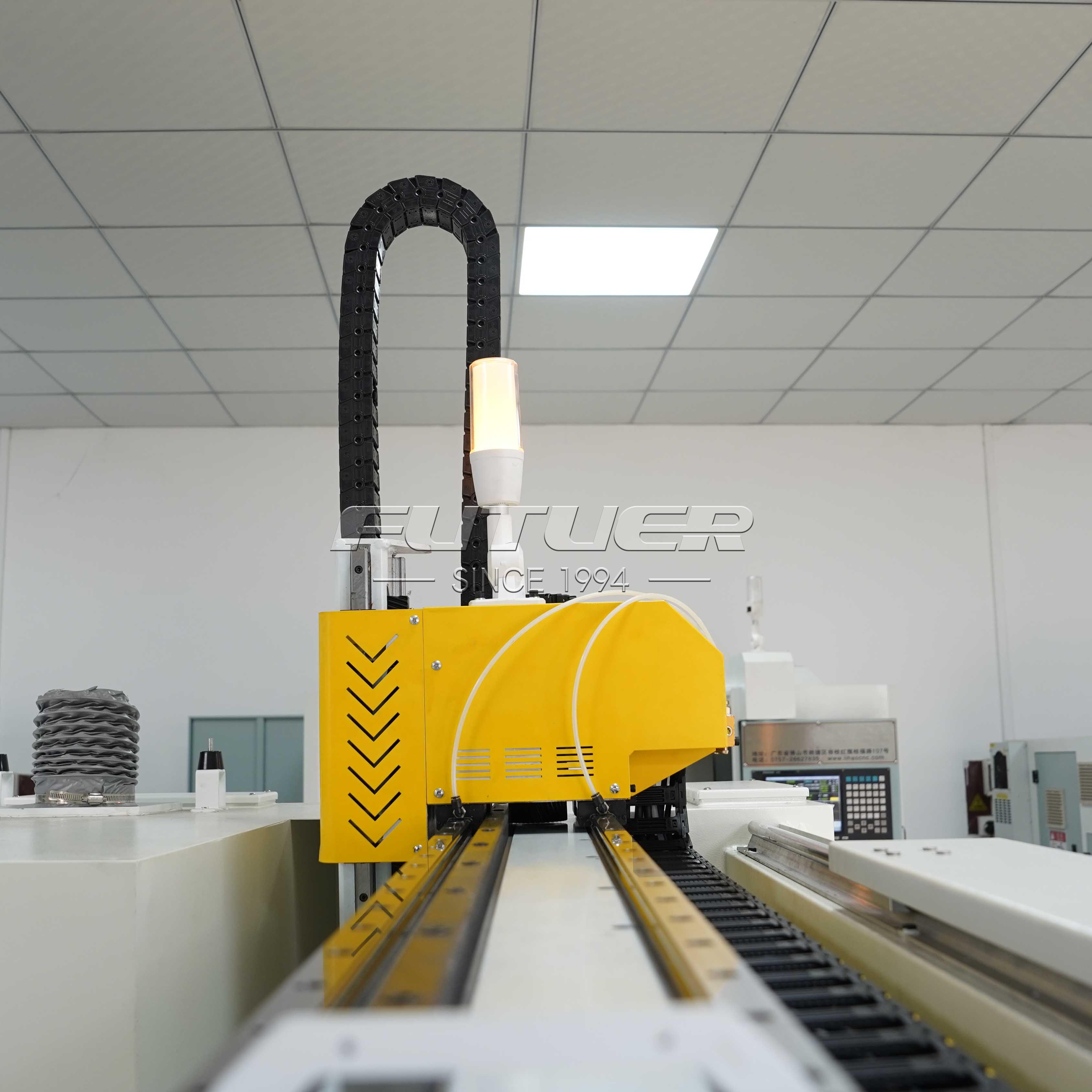
AI-Powered CNC Lathe Machines: Smarter Machining with Real-Time Adaptation
Self-Learning Algorithms for Dynamic Cutting Parameter Optimization
Modern CNC lathe machines leverage artificial intelligence to continuously refine cutting operations. Self-learning algorithms analyze real-time sensor data—including vibration patterns, thermal fluctuations, and material resistance—to autonomously adjust spindle speeds, feed rates, and depth of cut. This dynamic optimization prevents tool chatter, maintains dimensional accuracy within ±2µm, and adapts to material inconsistencies during long production runs. By eliminating manual parameter tuning, manufacturers achieve 18–22% faster cycle times while reducing scrap rates. The system’s neural networks accumulate operational knowledge, progressively enhancing efficiency across similar workpieces without reprogramming.
Predictive Tool Wear Analytics and Autonomous Maintenance Alerts
AI-driven CNC lathes employ spectral analysis of cutting forces and acoustic emissions to forecast tool degradation. Machine learning models correlate historical wear patterns with real-time telemetry, predicting failure windows 8–12 hours in advance with 94% accuracy. When thresholds are breached, these systems trigger autonomous alerts—prioritizing maintenance queues or initiating tool changes during non-critical operations. This proactive approach slashes unplanned downtime by 30–50% compared to scheduled replacement protocols. Integrated IoT connectivity enables remote diagnostics, allowing technicians to validate predictions and order replacements before production halts.
Multi-Axis and Hybrid CNC Lathe Machines: Unlocking Complex Part Production
Single-Setup Turning-Milling-Drilling Integration for Reduced Cycle Time
Modern multi-axis CNC lathes combine turning, milling, and drilling in a single configuration—eliminating part repositioning between machines. This reduces setup time by up to 40% (Advanced Manufacturing Report 2024) and enables complex geometries—such as turbine blades or medical implants—to be machined in one clamping cycle. Reduced handling minimizes human error while preserving micron-level accuracy. Faster throughput without sacrificing precision is essential for aerospace and automotive sectors, where intricate components demand both efficiency and reliability.
CNC Lathe + Additive Manufacturing Synergy for Net-Shape Geometries
Hybrid systems integrate CNC machining with additive manufacturing (3D printing) to produce near-net-shape parts. The additive process builds complex internal features impossible with subtractive methods alone, while CNC finishing ensures sub-20µm tolerance surfaces. This synergy reduces material waste by 60% compared to traditional methods. Industry reports highlight growing adoption for lightweight aerospace brackets and porous medical devices. Real-time toolpath adjustments accommodate thermal expansion during printing, enabling true “first-part-correct” production.
Micron-Level Accuracy in CNC Lathe Machines: Engineering Stability at Sub-2µm Tolerance
Active Thermal Compensation and Vibration Dampening Systems
Achieving sub-2µm tolerances demands uncompromising environmental control. Thermal expansion from machining friction or ambient shifts can induce deviations exceeding 5µm—enough to scrap critical aerospace or medical components. Modern systems counteract this with active thermal compensation: embedded sensors track spindle and bed temperatures, dynamically adjusting tool paths by 0.1µm increments. Simultaneously, electromagnetic vibration dampeners neutralize harmonic resonance from high-RPM operations, suppressing chatter that degrades surface finishes. This dual-stability architecture delivers consistent micron-level accuracy—where traditional machines fluctuate beyond ±5µm.
Industry-Specific Applications of CNC Lathe Machines: Aerospace, Medical, and Renewable Energy
CNC lathe machines deliver mission-critical precision across high-stakes industries. In aerospace, they manufacture turbine blades and landing gear components requiring tolerances under 5µm—often from titanium alloys engineered to withstand extreme temperatures and mechanical stress. Medical applications include surgical instruments and biocompatible implants, where flawless surface finishes prevent bacterial adhesion and ensure sterilization integrity. Renewable energy relies on CNC lathes for wind turbine bearings and solar panel fixtures—large-scale components designed to maintain exact dimensional stability over decades of environmental exposure.
Each sector benefits from the technology’s material versatility—from aerospace composites to medical-grade polymers—ensuring performance in specialized operating conditions. Repeatability across thousands of cycles supports mass production while meeting strict certification standards like AS9100, ISO 13485, and IEC 61400.
| Industry | Critical Components | Material Requirements |
|---|---|---|
| Aerospace | Turbine blades, engine shafts | Titanium alloys, heat-resistant composites |
| Medical | Orthopedic implants, surgical tools | Biocompatible titanium, sterilizable polymers |
| Renewable Energy | Wind turbine bearings, solar mounts | Corrosion-resistant steels, weatherproof alloys |
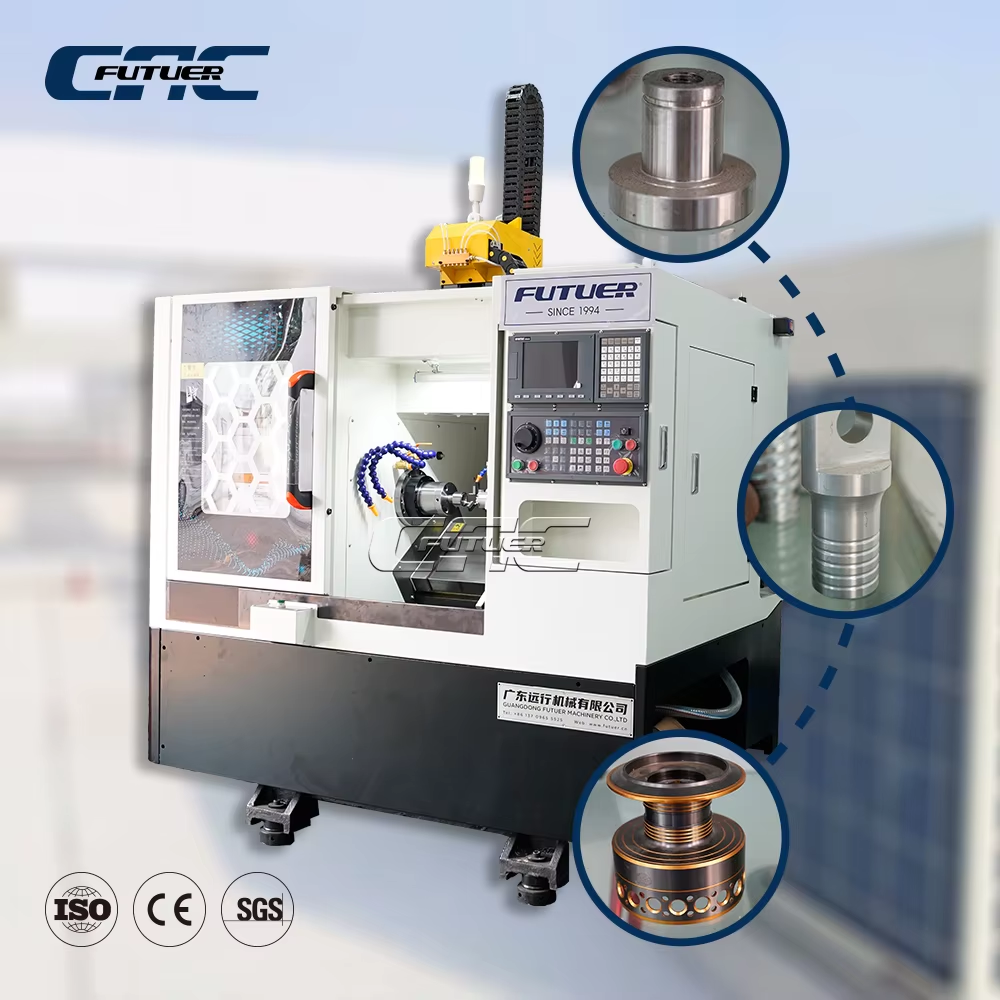
FAQs
What are the benefits of AI-powered CNC lathes?
AI-powered CNC lathes offer dynamic cutting parameter optimization, predictive maintenance, and improved cycle times, reducing downtime and production waste while improving machining precision.
How do AI-driven CNC lathes enhance tool wear management?
These machines use AI to analyze cutting forces and acoustic emissions, predicting tool wear with 94% accuracy and providing alerts for timely replacements, minimizing unplanned downtime.
What is the significance of hybrid CNC lathe systems?
Hybrid CNC systems combine traditional machining with additive manufacturing, enabling efficient production of complex geometries and reducing material waste significantly.
What industries benefit the most from CNC lathe technology?
Industries such as aerospace, medical, and renewable energy benefit significantly due to their need for highly precise and reliable components.
How do modern CNC lathes maintain micron-level accuracy?
Modern CNC lathes utilize active thermal compensation and vibration dampening systems to counteract environmental and operational deviations, achieving sub-2µm tolerances.
Table of Contents
- AI-Powered CNC Lathe Machines: Smarter Machining with Real-Time Adaptation
- Multi-Axis and Hybrid CNC Lathe Machines: Unlocking Complex Part Production
- Micron-Level Accuracy in CNC Lathe Machines: Engineering Stability at Sub-2µm Tolerance
- Industry-Specific Applications of CNC Lathe Machines: Aerospace, Medical, and Renewable Energy
- FAQs