
 EN
EN
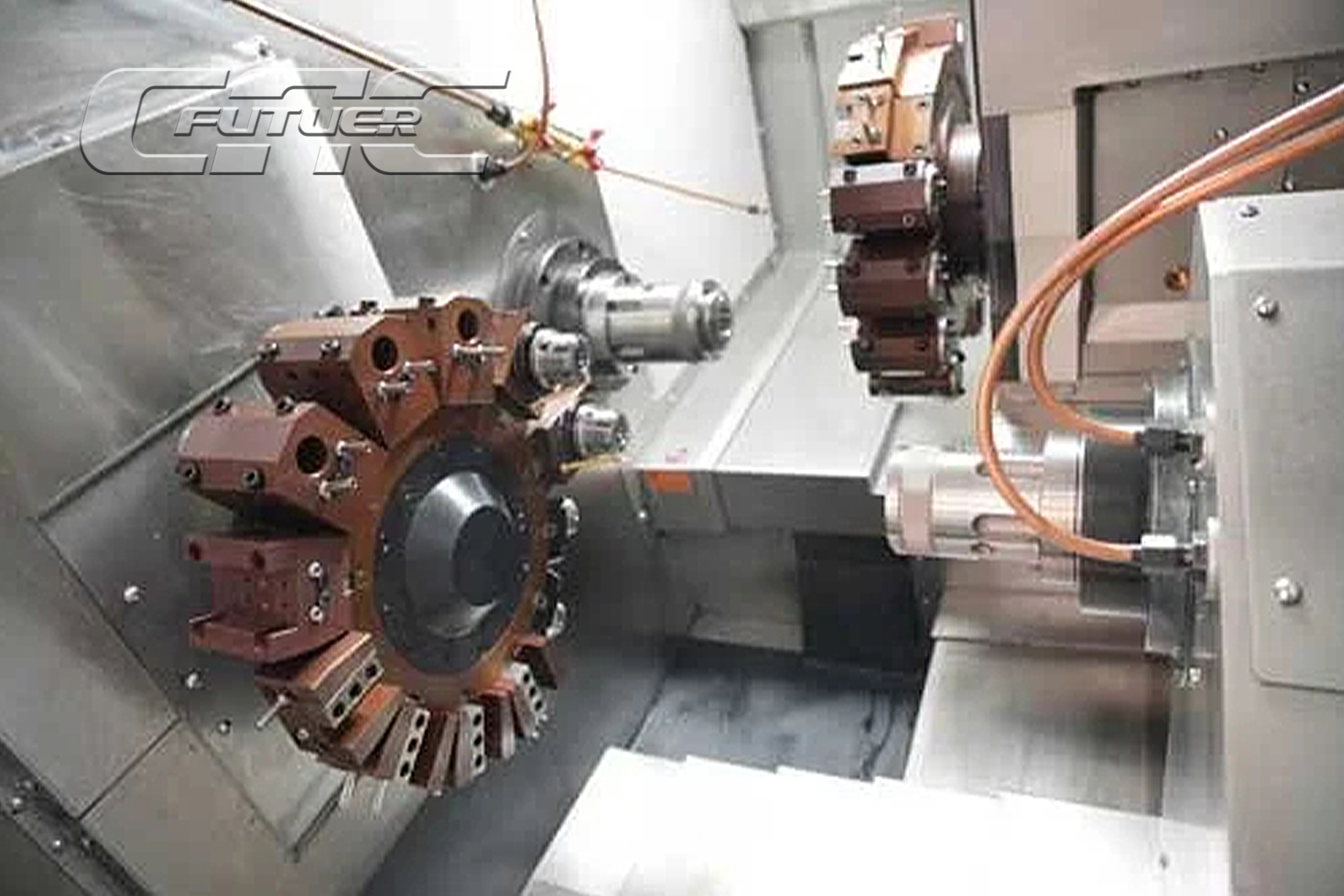
Core Engineering Enablers of High-Speed CNC Turning Machines
Machine Rigidity, Thermal Stability, and Structural Damping
Precision at high speeds begins with the machine’s physical foundation. Three interdependent engineering pillars ensure stability under extreme dynamic loads:
- Rigid construction, typically using high-damping cast iron frames and reinforced bed structures, suppresses vibration-induced tool deflection during aggressive cuts—critical for maintaining dimensional fidelity and surface integrity.
- Thermal stability systems, including liquid-cooled spindles, ball screws, and linear motors, maintain ambient temperature within ±0.5°C and limit thermal growth to under 0.0002" over extended operations—directly preserving positional accuracy.
- Structural damping integrates polymer-concrete composites or constrained-layer dampers into machine bases to absorb harmonic energy above 15 kHz, eliminating micro-chatter that degrades surface finish. Together, these features enable consistent sub-0.4 µm Ra finishes—even at spindle speeds up to 20,000 RPM.
High-RPM Spindle Design with Nanosecond-Response Control Systems
Spindles operating beyond 20,000 RPM demand a departure from conventional mechanics and control paradigms:
- Hydrodynamic bearings replace rolling-element designs, supporting radial loads exceeding 1,200 N via pressurized oil films—eliminating contact friction and wear while enabling stable operation at ultra-high rotational velocities.
- Direct-drive motor integration, with torque densities reaching 0.3 Nm/kg, delivers near-instantaneous acceleration (0–full speed in ≈0.8 seconds) and eliminates belt- or gear-induced backlash and torsional compliance.
- Nanosecond-resolution control loops, synchronized with linear encoders offering 0.01-µm feedback resolution, perform real-time compensation—for instance, dynamically offsetting centrifugal growth at 25,000 RPM to hold concentricity within 1 µm. This fusion of mechanical innovation and deterministic control transforms raw speed into repeatable accuracy.
Optimizing Feeds, Speeds, and Chip Dynamics for Efficiency and Surface Integrity
Chip Thinning Models and High-Feed Strategies for Cycle Time Reduction
Chip thinning goes beyond simple geometry—it acts as a productivity booster when engineers apply it correctly. When we reduce the radial depth of cut, something interesting happens: the actual chip thickness becomes thinner than what each tooth would normally encounter. This lets us push feed rates higher without damaging the cutting edges. Manufacturers who work with proven chip thinning formulas can implement these faster cutting methods safely, boosting how much material gets removed while keeping tools intact and surfaces smooth. Getting this right depends heavily on finding the right balance. If feeds are too aggressive, machines start vibrating uncontrollably and chips don't clear properly. But setting things too cautiously just wastes potential machining power. The best results come from combining heat analysis with live monitoring of machine power and vibrations. This combination pinpoints that sweet spot where everything works together: maximum production speed meets good chip control, excellent surface finish details down to microns, and consistent tool performance throughout operations. Add adaptive CNC controls to the mix and shops often see around 15 to maybe even 30 percent faster cycles without losing track of part dimensions.
Maintaining Precision at High Speed: Tolerance, Vibration, and Finish Control
Dynamic Compensation, In-Process Metrology, and Sub-Micron Tolerance Achievement
Maintaining those tiny sub-micron tolerances isn't just about making machines rigid anymore. We need smarter systems that actively correct errors as they happen. These dynamic compensation algorithms work by taking data from accelerometers and spindle vibrations across multiple axes. They constantly tweak the tool path to stop those annoying resonance issues before they actually show up as surface problems or shape mistakes. What really helps out is in-process metrology stuff like laser interferometers built right into the machine or those super accurate touch trigger probes. With these tools, we can fix deviations smaller than 1 micrometer while the part is still being machined. This cuts down on all that time spent inspecting and fixing things after the fact for most high precision parts according to a study published in the Journal of Manufacturing Systems last year. When designers do proper modal analysis upfront, it helps isolate those pesky structural harmonics so surface roughness stays under 0.1 micrometers Ra even when running at speeds over 15,000 RPM. Put all this together with good thermal management practices mentioned previously, and manufacturers get consistent results that meet metrological standards run after run.
Smart Tooling and Automation Integration for Reliable CNC Turning Machine Performance
High-Stability Tool Holders, Advanced Coatings, and AI-Driven Adaptive Monitoring
The reliability when running at high speeds is just as dependent on how tools are mounted as it is on the quality of the machine itself. Tool holders designed for stability use methods like hydraulic expansion or induction shrink fit clamping techniques which bring runout down below 2 microns and stop tools from coming loose during operation. This means better contact between the tool and workpiece while keeping vibrations under control. For those working with tough materials, advanced coating technologies have made a big difference. Multilayer TiAlN coatings specifically help cut down heat buildup in the cutting area, prevent material sticking to the tool surface, and can actually triple the lifespan of cutting tools when dealing with hardened steel or difficult alloys like Inconel.
AI powered monitoring goes beyond just the physical components by adding smarts to the whole process. Real time data from various sensors including vibration levels, sound emissions, motor currents and temperature readings gets fed into machine learning algorithms that can spot early signs of tool wear, chips forming, or dangerous heat buildup. The system then adjusts cutting parameters on its own during operation, stopping major failures before they happen and keeping surface finishes below that critical Ra 0.4 micrometer threshold. In actual factories, these setups have cut scrap rates by around 22% and noticeably improved how long machines stay productive between maintenance stops. Combine this with automatic tool changing systems and robots for parts handling, and we're looking at fully automated CNC turning operations that run overnight without anyone watching, yet still maintain tight tolerances and consistent quality across production runs.
FAQ
What are the core engineering enablers of high-speed CNC turning machines?
The core engineering enablers include machine rigidity, thermal stability, and structural damping, which together ensure precision at high speeds.
How do high-RPM spindle designs contribute to CNC machine performance?
High-RPM spindle designs with nanosecond-response control systems enable stable operation at ultra-high velocities, ensuring accuracy and repeatability.
Why is chip thinning important in CNC machining?
Chip thinning boosts productivity by allowing higher feed rates without damaging cutting edges, improving material removal and maintaining tool integrity.
How is precision maintained at high speeds?
Precision is maintained using dynamic compensation, in-process metrology, and sub-micron tolerance achievement, along with virtual error correction techniques.
What role does smart tooling and automation play in CNC turning machines?
Smart tooling and automation, including AI-driven adaptive monitoring, help ensure reliable machine performance and lower maintenance costs.
Table of Contents
- Core Engineering Enablers of High-Speed CNC Turning Machines
- Optimizing Feeds, Speeds, and Chip Dynamics for Efficiency and Surface Integrity
- Maintaining Precision at High Speed: Tolerance, Vibration, and Finish Control
- Smart Tooling and Automation Integration for Reliable CNC Turning Machine Performance
-
FAQ
- What are the core engineering enablers of high-speed CNC turning machines?
- How do high-RPM spindle designs contribute to CNC machine performance?
- Why is chip thinning important in CNC machining?
- How is precision maintained at high speeds?
- What role does smart tooling and automation play in CNC turning machines?