
 EN
EN
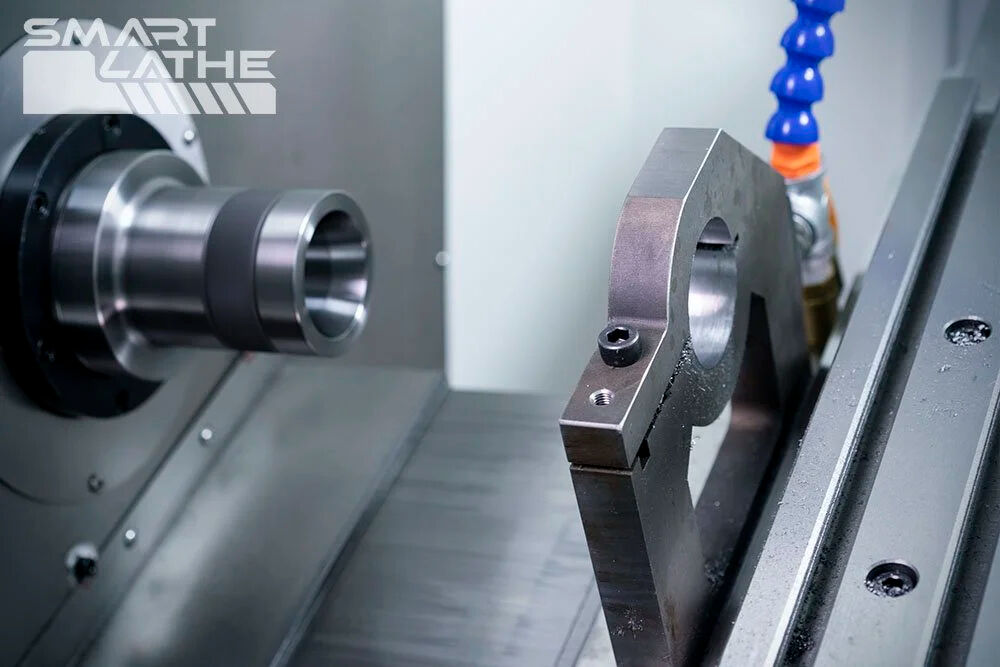
Foundations of CNC Turning Machine Cutting Parameters
The three core parameters: Cutting speed, feed rate, and depth of cut – interdependence and physical constraints
In CNC turning operations, three main factors control everything: cutting speed measured in surface feet per minute, feed rate in inches per revolution, and depth of cut in inches. These variables work together closely. When someone increases cutting speed, it generates more heat, so they usually need to slow down the feed rate to keep the cutting tools from wearing out too fast. There are real world limitations too. Mid range machines typically handle between 15 and 75 lb-ft of torque. Workpieces must be rigid enough, vibrations need to stay within acceptable ranges, and cutting tools can only withstand certain amounts of heat before they deform. If temperatures at the cutting point go over about 400 degrees Fahrenheit (that's around 204 Celsius), crater wear happens faster. On the flip side, if the depth of cut isn't sufficient, the tool just rubs against the material rather than making clean cuts, which ruins surface quality and wears down edges quicker. Getting these right means looking at several things at once including how hard the material is on Rockwell C scale, what shape the cutting tool has, whether coolant reaches where it needs to, and the actual shape of the part being made.
Why parameter optimization matters: Balancing productivity, tool life, surface quality, and energy efficiency on the CNC turning machine
Getting the right parameters sorted out makes a real difference in how machines perform. When feed rates drop by around 15%, tools last about 40% longer while keeping surfaces smooth enough at under 125 microinches Ra. On the flip side, when parameters aren't set properly, problems multiply fast. Cutting too deep causes vibrations that mess up parts, leading to waste rates climbing as high as 25%. And if settings are too cautious just to be safe, energy bills go up by roughly 20% per item made, industry data shows. Finding that sweet spot means taking out material quickly without messing up measurements (needs to stay within 0.0005 inch tolerance for exact parts) or damaging surfaces. Tooling expenses alone eat up between 7% and 12% of what it costs to machine things, so tweaking those settings even a little bit cuts down on what each finished part costs and saves time that would otherwise be wasted.
Optimizing Cutting Speed for CNC Turning Machine Efficiency
Material-dependent speed limits: ISO recommendations and thermal wear mechanisms for steel, aluminum, and engineering plastics
The physical characteristics of materials set realistic limits on how fast we can cut them effectively. According to standard ISO 3685 guidelines, carbon steel works well within a range of around 100 to 150 meters per minute. Going beyond this often leads to problems with crater wear caused by excessive heat buildup. Aluminum alloys handle much higher speeds between 300 and 500 m/min because they conduct heat better, but there's still an issue with built-up edges forming unless tools have good coatings or adequate coolant is applied during machining. For engineering plastics such as PEEK, operators need to keep cutting speeds under 200 m/min otherwise localized melting occurs which affects dimensional accuracy. When manufacturers push past these recommended ranges, they encounter what's called diffusion wear where parts of the tool actually melt into the material being worked on. This not only damages equipment but also increases replacement expenses significantly, sometimes by as much as 40 percent in large scale manufacturing operations.
The efficiency paradox: When higher cutting speed increases MRR but degrades energy per part – practical thresholds for CNC turning machine operators
Raising cutting speed definitely improves how fast material gets removed from parts, but there comes a point where things get inefficient. Studies indicate going beyond ideal speeds by around 20% can actually make energy consumption jump by about 35%. Why? Because when speeds climb too high, cutting forces grow exponentially, tools wear out faster needing more regular maintenance or replacements, and cooling systems have to work harder too. These efficiency sweet spots aren't universal either they depend heavily on what kind of material is being worked with. For instance, softer metals might handle higher speeds better than harder alloys would.
| Material | Speed Efficiency Threshold | Power Reduction Potential |
|---|---|---|
| Mild Steel | 180 m/min | 22% |
| 6061 Aluminum | 450 m/min | 30% |
| Cast Iron | 120 m/min | 18% |
Operators should use real-time spindle power monitoring—not just theoretical calculations—to identify peak efficiency zones where MRR gains outweigh energy penalties.
Feed Rate and Depth of Cut Coordination for Stable CNC Turning Machine Operation
Feed rate's dual role: Quantifying its impact on surface roughness (Ra) and flank wear progression
The feed rate has two sides to it that work against each other: it affects both how smooth the finished part looks and how fast the cutting tools wear out. When feed rates go up, so does the Ra value. Research indicates that increasing feed by just 0.1 mm per revolution can make surfaces rougher by around 20 to 40 percent, though this varies based on what material is being cut and the condition of the tool itself. At the same time, pushing too much feed creates more stress on the tool and generates extra heat through friction, which speeds up wear along the tool's edge. The way this wear develops tends to follow a straight line pattern according to most studies, where the amount of wear grows proportionally with how far the tool cuts into materials. With tougher alloys where controlling temperature matters most, machinists need to carefully adjust feed settings to get acceptable surface quality without wearing out inserts too quickly.
Depth of cut stability: Interpreting stability lobe diagrams to avoid chatter and maximize metal removal on the CNC turning machine
The depth of cut, or DOC, plays a major role in how much material gets removed during machining processes, but there are limits based on what's considered stable operation. Stability lobe diagrams, commonly called SLDs, help figure out which combinations of spindle speeds and DOC values work best by showing where vibrations tend to die down instead of getting worse. When working at these optimal points on the diagram, say around 1200 RPM with about 3.5 mm DOC, shops often see anywhere from 25 to 40 percent better metal removal rates compared to standard settings, all while keeping those annoying vibrations under control at less than 0.1 mm amplitude. For CNC programmers looking to get the most out of their machines, incorporating these stability charts into programming makes sense. It helps them steer clear of trouble spots where things start vibrating excessively. This becomes really important when dealing with thin wall components or long tools sticking out past their supports, because even small changes in DOC can lead to big problems with chatter if not properly managed.
Material-Specific Parameter Optimization for CNC Turning Machine Applications
The way materials behave isn't just about knowing which numbers to plug in, it's understanding why those numbers actually work. Take aluminum alloys for instance they can handle cutting speeds between 200 to 300 meters per minute because they conduct heat so well. But when working with hardened steel, machinists need to slow things down quite a bit, usually sticking to around 50 to 80 m/min to stop tool tips from wearing out too fast through crater formation. Composites are another story entirely. These materials need very careful handling with feed rates below 0.15 mm per revolution otherwise layers start separating during machining. Brass on the other hand is much more forgiving, allowing feed rates up to 0.3 mm per revolution without issues. Get these material specifics wrong and shops often see their energy bills jump by about 25% plus tools wear out at an alarming rate that makes production costs skyrocket.
Three material-driven calibrations are essential:
- Thermal sensitivity: High-melting-point metals (e.g., titanium) require lower speeds and robust coolant delivery to manage heat accumulation
- Abrasiveness: Particle-reinforced composites need shallower depths of cut (≤0.5 mm) to protect insert edges
- Ductility: Gummy materials like copper benefit from higher rake angles and effective chip breakers to prevent stringy chips and built-up edge
Without such adjustments, surface roughness (Ra) can exceed 3.2 µm—150% above aerospace-grade tolerances—transforming the CNC turning machine from a precision asset into a source of rework and scrap.
Advanced CNC Turning Machine Parameter Optimization Methods
From Taguchi to RSM: When to use statistical design vs. machine learning for multi-objective goals (tool life, Ra, energy)
Old school approaches such as Taguchi Design of Experiments still work pretty well for looking at just 2 to 3 main factors during preliminary testing phases. These methods are great when focusing on simple goals like checking surface roughness levels or basic tool wear characteristics. What makes them stand out is their ability to provide reliable data without needing too many experiments or heavy computer processing power. But things get complicated when trying to balance several conflicting goals at once. Think about wanting longer tool life while keeping Ra values down and cutting back on energy consumption all at the same time. That's where Response Surface Methodology really shines. This technique handles those tricky nonlinear relationships between variables using quadratic equations, which becomes especially important when dealing with known thermal limitations or mechanical stability constraints in real world machining operations.
Taguchi methods and RSM just don't cut it when dealing with real time sensor information or adjusting to those inevitable material differences between production batches. When shops have all sorts of sensors collecting data on vibrations, how much power the spindle is drawing, and even images showing tool wear during processing, machine learning simply works better than old school techniques. Some research published in a respected journal looked at over 17 thousand machining runs and showed that using neural networks cut down energy consumption per part by around 18 percent while tools lasted about 25 percent longer. These systems pick up on tiny changes in materials that RSM would completely miss. For most manufacturing floors, starting with traditional stats makes sense for basic setup checks. But once companies want to scale up their operations and implement continuous improvement across complex CNC turning processes with lots of different parts, switching to machine learning becomes pretty much essential.
FAQ:
Q: What are the main factors controlling CNC turning operations?
A: The primary factors are cutting speed, feed rate, and depth of cut. These parameters work in tandem to determine machine performance and tool longevity.
Q: Why is parameter optimization important in CNC turning machines?
A: It balances productivity, tool life, surface quality, and energy efficiency, reducing costs and waste, and ensuring precise measurements.
Q: How do material-specific calibrations affect CNC turning operations?
A: Different materials have distinct thermal, abrasive, and ductile characteristics that necessitate tailored calibration settings to optimize cutting performance and prevent excessive tool wear.
Q: What advanced methods are available for optimizing CNC turning parameters?
A: Statistical design methods like Taguchi Design and Response Surface Methodology, and machine learning approaches can be used for optimizing parameters to achieve multi-objective goals such as extending tool life, improving surface quality, and reducing energy consumption.
Table of Contents
- Foundations of CNC Turning Machine Cutting Parameters
- Optimizing Cutting Speed for CNC Turning Machine Efficiency
- Feed Rate and Depth of Cut Coordination for Stable CNC Turning Machine Operation
- Material-Specific Parameter Optimization for CNC Turning Machine Applications
- Advanced CNC Turning Machine Parameter Optimization Methods