
 EN
EN
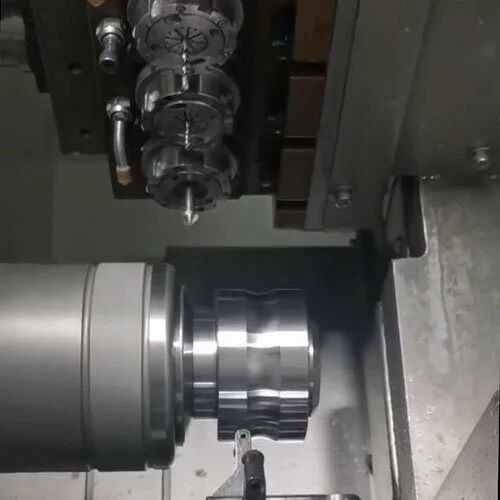
How Coolant Selection Directly Influences CNC Turning Machine Quality
Coolant Effects on Surface Finish, Dimensional Accuracy, and Tool Wear in CNC Turning Machine Operations
Coolant choice critically impacts three core machining outcomes:
- Surface integrity: Water-soluble coolants prevent thermal distortion, reducing micro-fractures by up to 40% compared to dry machining.
- Dimensional stability: Effective heat dissipation minimizes thermal expansion, maintaining tolerances within ±0.005 mm.
-
Tool lifespan: Lubricating oils reduce friction at tool-workpiece interfaces, decreasing flank wear by 30% in carbide tooling.
Synthetic fluids balance cooling and lubrication, extending insert longevity during continuous operations.
Material-Specific Coolant Compatibility for Common CNC Turning Machine Workpieces: Titanium, Stainless Steel, and Aluminum
Workpiece material dictates optimal coolant chemistry:
| Material | Coolant Requirement | Performance Impact |
|---|---|---|
| Aluminum | High-cooling emulsions | Prevents material adhesion and galling |
| Stainless Steel | Extreme-pressure additives | Reduces work hardening and notch wear |
| Titanium | Synthetic esters + MQL | Combats heat retention and chemical reactivity |
| For titanium alloys, minimum quantity lubrication (MQL) systems deliver precision coolant application, lowering cutting temperatures by 200°C while avoiding fire risks. |
Coolant Delivery Methods and Their Impact on CNC Turning Machine Performance
Through-Tool, Flood, and MQL: Comparative Effects on Chip Evacuation, Thermal Control, and Surface Integrity
When it comes to precision CNC turning machines, there are basically three main ways coolant gets delivered to the workpiece, and each one affects how good the final part turns out. Take high pressure through tool cooling for instance. This method really pushes coolant right into where the cutting action happens, which means chips get cleared away about 40 percent better than other methods. Plus, it helps cut down on heat problems that can warp parts made from tricky materials like titanium where tolerances need to be super tight around plus or minus 0.005 millimeters.
Flood cooling, by contrast, excels in thermal management for high-volume steel turning, where flow rates of 8–12 GPM maintain consistent temperatures below material critical thresholds. However, its excessive fluid volume increases filtration demands and introduces contamination risks to finished surfaces.
Minimum Quantity Lubrication (MQL) optimizes surface integrity for non-ferrous metals like aluminum, applying atomized coolant-oil mixtures at just 50–100 ml/hr. This prevents thermal shock and eliminates secondary cleaning steps—yet struggles with chip removal in deep-groove or high-aspect-ratio turning, where trapped swarf can compromise dimensional accuracy.
| Method | Chip Evacuation | Thermal Control | Surface Integrity | Best For |
|---|---|---|---|---|
| Through-Tool | ⋯⋯⋯⋯⋯ | ⋯⋯⋯⋯⋰ | ⋯⋯⋯⋰⋰ | Deep-hole titanium |
| Flood | ⋯⋯⋯⋰⋰ | ⋯⋯⋯⋯⋯ | ⋯⋯⋰⋰⋰ | High-volume steel |
| MQL | ⋯⋯⋰⋰⋰ | ⋯⋯⋯⋰⋰ | ⋯⋯⋯⋯⋯ | Precision aluminum |
Finding the right method means aligning coolant flow characteristics with the shape and material of what's being machined. Take through-tool cooling; for instance, it stops chips from getting recut when working on complex shapes. Minimum Quantity Lubrication (MQL) works wonders too, especially when making medical parts where surface finish matters down to the microns.
Synergistic Integration of Tooling and Coolant Systems for Sustained CNC Turning Machine Quality
Thermal Management Strategies: Matching Cutting Tool Materials (Carbide, Ceramics, CBN) with Coolant Type and Delivery
Getting thermal management right means matching cutting tool materials with appropriate coolant systems. For carbide tools, high pressure coolant is essential since these tools can crack when exposed to temperatures above 800 degrees Celsius during operation. Ceramic inserts work best with minimum quantity lubrication systems which helps reduce thermal shock problems. When working with Cubic Boron Nitride (CBN) tools, manufacturers typically rely on oil based coolants to maintain stability during the intense heat generated in hard metal turning operations.
| Tool Material | Ideal Coolant Type | Delivery Method | Thermal Advantage |
|---|---|---|---|
| Carbide | Synthetic emulsion | Through-tool | Prevents edge chipping |
| Ceramics | Vegetable oil | MQL | Reduces thermal stress |
| CBN | Neat oil | Flood | Maintains cutting stability |
Critical Coolant System Components—Reservoir, Pump, Filtration, and Temperature Control—and Their Role in CNC Turning Machine Reliability
Coolant system integrity directly dictates CNC turning machine longevity. Three components prevent 78% of machining failures:
- Multi-stage filtration removes particles below 20 microns, extending pump lifespan by 2.5 years
- Variable-speed pumps maintain 15–20 psi pressure for consistent chip evacuation
- Thermostatic controllers keep coolant within ±2°C of optimal range
Systems lacking temperature control induce thermal drift errors in 63% of titanium machining operations. Regular maintenance of reservoir seals prevents bacterial growth that degrades coolant effectiveness and accelerates corrosion.
Frequently Asked Questions (FAQ)
What is the best coolant type for CNC turning machines?
The optimal coolant type depends on material and tooling requirements. Synthetic emulsions are often preferred for carbide tools, while ceramics benefit from vegetable oil lubrication.
How does coolant selection impact dimensional accuracy?
Coolant selection affects heat dissipation, thus preserving dimensional stability by minimizing thermal expansion.
Are there specific coolants for different materials like titanium and aluminum?
Yes, materials like titanium require synthetic esters and MQL systems for effective cooling, while aluminum benefits from high-cooling emulsions.