
 EN
EN
Introduction
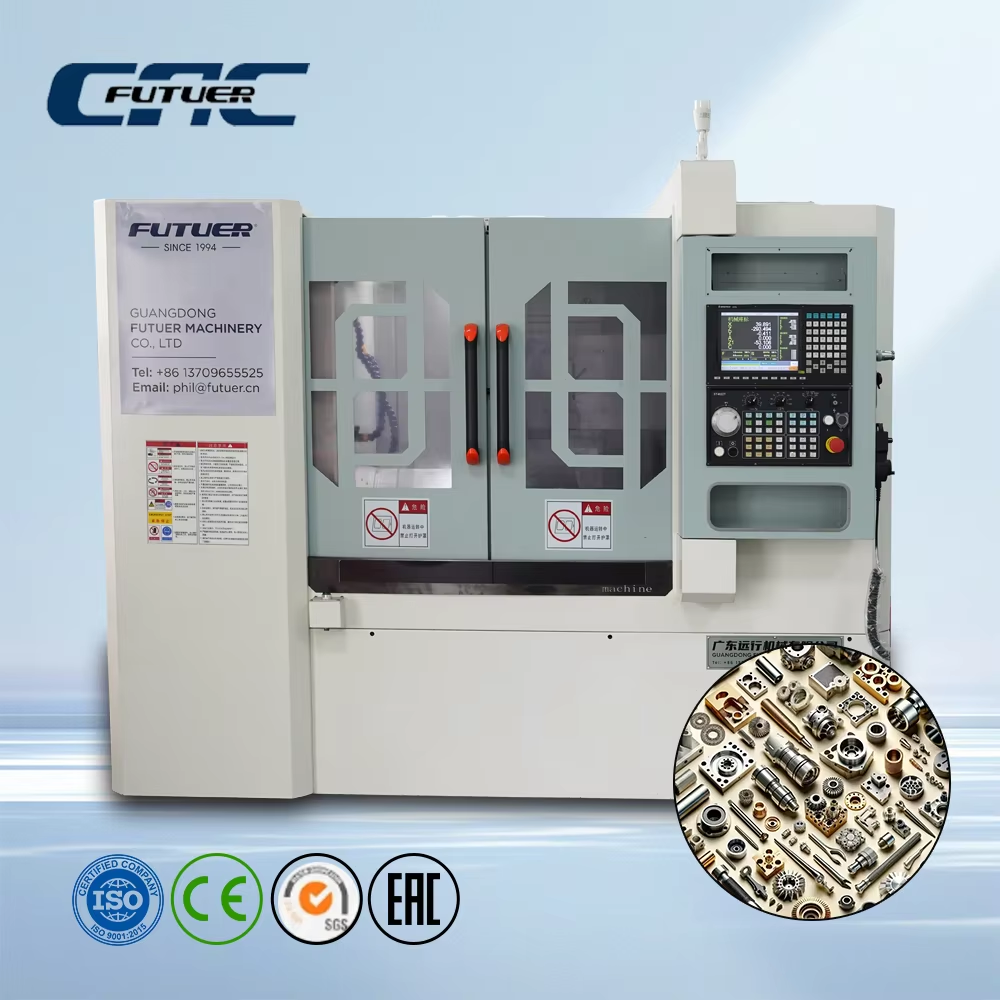
A multi-tasking CNC turning machine is an advanced machining system that combines turning, milling, drilling, and tapping operations within one machine platform.
Unlike conventional CNC lathes that mainly focus on rotational machining, mill-turn machines integrate additional machining functions such as live tooling, C-axis control, and optional Y-axis movement.
This allows manufacturers to complete more complex parts with fewer setups, reducing workpiece handling and improving production consistency.
For manufacturers producing precision components with multiple machining features, a multi-tasking CNC turning machine provides a flexible solution for improving machining efficiency and process control.
How Multi-Tasking CNC Turning Machines Work
A traditional CNC turning process often requires several separate operations. A component may need to move between different machines for:
- turning
- milling
- drilling
- secondary machining
Each additional setup introduces extra handling and potential alignment variation.
A multi-tasking CNC turning machine combines these operations in one machining environment. The workpiece remains clamped while different tools perform turning and milling processes.
This single-setup approach is especially useful for parts with features such as:
- cross holes
- slots
- keyways
- angled drilling positions
- complex contour surfaces
By reducing the need for repeated positioning, mill-turn machining helps improve consistency and simplify production workflows.
Key Technologies Behind Mill-Turn Machining
Live Tooling, Y-Axis, and C-Axis Control
The core capability of a mill-turn CNC machine comes from the integration of multiple machining axes.
Live tooling allows cutting tools mounted on the turret to rotate independently, enabling milling and drilling operations directly on the turning machine.
C-axis control provides accurate spindle positioning, allowing the machine to perform operations such as:
- bolt-hole patterns
- slot machining
- contour milling
Y-axis movement expands machining capability by allowing tools to move away from the centerline, making it possible to process off-center features and more complex geometries.
Together, these technologies allow CNC turning machines to handle a wider range of precision components without requiring multiple machine transfers.
Spindle Design and Machine Configuration
A reliable multi-tasking CNC turning machine requires a spindle system designed for both turning and milling operations.
Important factors include:
- spindle rigidity
- torque capability
- thermal stability
- tooling compatibility
Many advanced CNC turning machines use driven tooling systems and rigid machine structures to maintain machining stability during combined operations.
For applications requiring front and back-side machining, a sub-spindle can provide automatic part transfer and support additional machining processes.
The final machining performance depends on machine configuration, tooling selection, material characteristics, and process optimization.
Benefits of Single-Setup CNC Turning
Improved Accuracy and Process Consistency
One of the major advantages of single-setup machining is reducing repeated workpiece repositioning.
When a part is transferred between different machines, maintaining precise relationships between multiple features can become more challenging.
A mill-turn CNC machine keeps the component in the same fixture during multiple operations, helping maintain dimensional consistency and reducing setup-related variation.
This is valuable for industries requiring precision manufacturing, including:
- aerospace components
- automotive parts
- medical equipment
- industrial machinery
Improved Production Efficiency
By combining multiple machining processes into one platform, multi-tasking CNC turning machines can help reduce:
- setup operations
- material handling
- production transfers
- workflow complexity
This makes them suitable for manufacturers producing complex parts, prototypes, and small-to-medium production batches.
The actual improvement depends on factors such as part geometry, production volume, tooling strategy, and machine configuration.
How to Choose the Right CNC Turning Machine
Choosing the right CNC turning machine depends on the complexity of the parts being manufactured and the required machining operations.
| Feature | Mill-Turn CNC Machine | Advanced Multi-Tasking System |
|---|---|---|
| Machining capability | Turning combined with milling and drilling functions | More extensive multi-axis machining capability |
| Suitable applications | Complex parts requiring several operations | Highly complex components with multiple machining surfaces |
| Investment level | Suitable for flexible production needs | Higher investment for advanced automation requirements |
| Production style | High-mix and precision machining | Complex and demanding manufacturing environments |
For many manufacturers, a mill-turn CNC turning machine provides a practical balance between machining capability and production flexibility.
More advanced systems may be suitable when production requires extensive multi-axis machining, automated transfer, or highly complex component processing.
The best choice depends on actual part requirements, production goals, and long-term manufacturing plans.
Frequently Asked Questions
What is a multi-tasking CNC turning machine?
A multi-tasking CNC turning machine combines turning, milling, drilling, and other machining operations into one platform, allowing manufacturers to complete more processes in a single setup.
What is the difference between a CNC lathe and a mill-turn machine?
A CNC lathe mainly performs turning operations, while a mill-turn machine integrates milling functions through live tooling, C-axis control, and additional machining capabilities.
What are the advantages of single-setup machining?
Single-setup machining can reduce workpiece handling, improve process consistency, and minimize potential alignment variation.
Which industries use multi-tasking CNC turning machines?
These machines are commonly used in aerospace, automotive, medical, electronics, and precision manufacturing industries.
How should I select a CNC turning machine?
Selection should consider part complexity, required machining processes, production volume, accuracy requirements, and automation needs.
Table of Contents
- Introduction
- How Multi-Tasking CNC Turning Machines Work
- Key Technologies Behind Mill-Turn Machining
- Live Tooling, Y-Axis, and C-Axis Control
- Spindle Design and Machine Configuration
- Benefits of Single-Setup CNC Turning
- Improved Accuracy and Process Consistency
- Improved Production Efficiency
- How to Choose the Right CNC Turning Machine
- Frequently Asked Questions
- What is a multi-tasking CNC turning machine?
- What is the difference between a CNC lathe and a mill-turn machine?
- What are the advantages of single-setup machining?
- Which industries use multi-tasking CNC turning machines?
- How should I select a CNC turning machine?