
 EN
EN
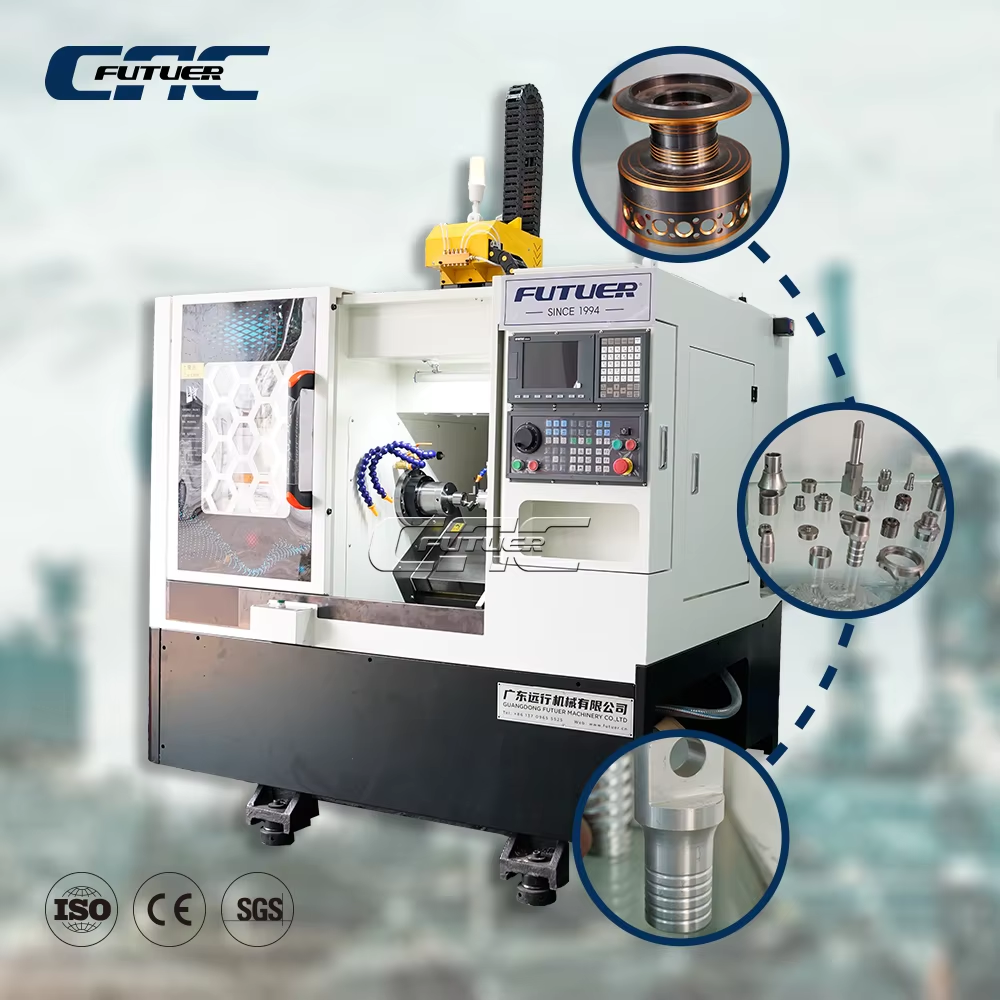
Precision Control and Thermal Stability in CNC Turning
Precision and consistency are critical factors when manufacturers select a CNC lathe for demanding machining applications. A Syntec-controlled CNC lathe combines advanced CNC control technology with rigid mechanical structures, servo systems, and optimized machining processes to improve dimensional stability and production reliability.
The actual machining accuracy of a CNC lathe depends on multiple factors, including machine rigidity, spindle performance, guideway design, ball screw accuracy, servo tuning, tooling conditions, and environmental control. By integrating these elements effectively, manufacturers can achieve stable machining performance for industries that require tight tolerances, such as automotive components, medical parts, and precision mechanical products.
Thermal variation is one of the major factors affecting CNC machining accuracy. During continuous operation, spindle heat generation and environmental temperature changes may influence dimensional consistency. Many modern CNC turning machines incorporate thermal compensation technologies and improved structural designs to reduce thermal deformation and maintain stable performance during long production cycles.
Intelligent CNC Control for Consistent Machining Results
A reliable CNC control system plays an important role in maintaining machining consistency. Syntec CNC systems provide functions such as multi-axis control, machining parameter management, tool offset compensation, and real-time monitoring, helping operators achieve repeatable production results.
During machining, factors such as tool wear, cutting force variation, and material differences can influence part quality. With proper CNC parameter optimization and process monitoring, manufacturers can reduce dimensional variation and maintain more stable production output.
For high-precision applications, the combination of CNC control technology with suitable machine hardware is essential. A well-matched system allows operators to improve surface finish, reduce manual adjustment requirements, and increase confidence in repeated production.
Applications of Syntec CNC Lathes in Precision Manufacturing
Aerospace and Automotive Component Machining
Aerospace and automotive manufacturers often require CNC turning machines that can maintain consistent quality across complex components. Parts such as shafts, bushings, connectors, and precision fittings require accurate turning operations, stable cutting conditions, and reliable repeatability.
Syntec-controlled CNC lathes can support these applications by providing flexible programming functions, multi-axis machining capability, and efficient production management. When combined with proper tooling and process optimization, these machines help manufacturers achieve stable machining performance for demanding components.
Medical and High-Precision Parts Production
Medical component manufacturing requires strict control of dimensions, surface quality, and process consistency. CNC turning solutions equipped with advanced control systems help manufacturers produce complex small parts while maintaining reliable repeatability.
However, achieving medical-grade machining results depends not only on the CNC system but also on machine calibration, inspection processes, material control, and production management.
Improving Production Efficiency Through Better CNC Integration
Modern CNC lathes focus not only on precision but also on overall manufacturing efficiency. Features such as user-friendly programming interfaces, tool management functions, and automation integration can help reduce setup time and improve operator productivity.
For manufacturers handling multiple part types, flexible CNC systems allow quicker production changes and easier adjustment of machining parameters. This is especially valuable for job shops and manufacturers producing customized components in small or medium batches.
Remote monitoring and diagnostic functions also support preventive maintenance by helping operators identify abnormal conditions earlier and reduce unexpected downtime.
Choosing the Right CNC Lathe Solution for Your Production Needs
Selecting a CNC lathe requires evaluating several factors:
- Part size and geometry
- Required machining operations
- Production volume
- Material characteristics
- Accuracy requirements
- Automation needs
A high-performance CNC lathe should be matched with the actual production environment rather than selected only according to maximum specifications.
For manufacturers seeking reliable CNC turning solutions, Futuer CNC provides CNC lathe equipment designed for precision machining, flexible production, and long-term operational efficiency.
FAQ
What advantages does a Syntec-controlled CNC lathe provide?
A Syntec-controlled CNC lathe offers advanced motion control functions, flexible programming options, and reliable machining management, helping manufacturers improve production consistency.
Does CNC control determine machining accuracy?
CNC control is an important factor, but final accuracy also depends on machine structure, spindle performance, tooling, calibration, and machining conditions.
Are Syntec CNC lathes suitable for precision industries?
Yes. When properly configured and maintained, Syntec-controlled CNC lathes can support precision applications in industries such as automotive, medical, and mechanical component manufacturing.
How can CNC lathes improve production efficiency?
CNC lathes improve efficiency through automated machining processes, reduced manual intervention, faster setup adjustment, and better production repeatability.
What should manufacturers consider before purchasing a CNC lathe?
Manufacturers should consider part requirements, production volume, machining complexity, accuracy expectations, and after-sales support when selecting CNC equipment.
Table of Contents
- Precision Control and Thermal Stability in CNC Turning
- Intelligent CNC Control for Consistent Machining Results
- Applications of Syntec CNC Lathes in Precision Manufacturing
- Improving Production Efficiency Through Better CNC Integration
- Choosing the Right CNC Lathe Solution for Your Production Needs
- FAQ