
 EN
EN
Closed-Loop Control and Compensation Technologies for Better CNC Precision
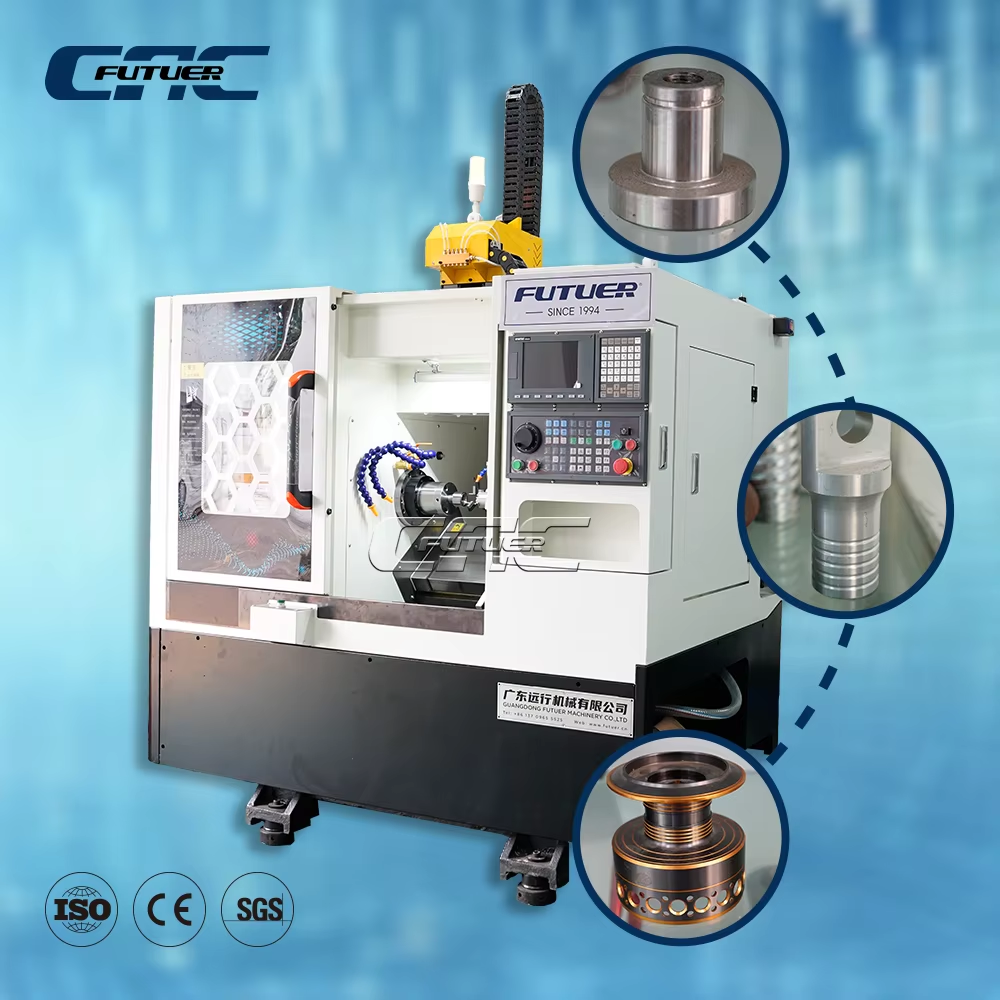
Precision and consistency are important factors when manufacturers select a CNC turning machine for demanding production environments. A Syntec-controlled CNC lathe combines CNC motion control technology with machine hardware, servo systems, and feedback functions to improve machining stability and repeatability.
Closed-loop control allows the CNC system to monitor axis movement and compare actual machine position with programmed commands. By using feedback signals from encoders and servo systems, the controller can improve positioning response and reduce the influence of mechanical errors during operation.
In high-precision machining applications, additional compensation technologies such as pitch error compensation, thermal adjustment, and geometric calibration can help maintain stable machining performance. However, the final accuracy of a CNC lathe depends on the complete machine structure, spindle performance, tooling condition, environmental control, and production process.
For industries such as automotive components, medical parts, and precision mechanical manufacturing, combining reliable CNC control with a rigid machine design helps manufacturers achieve consistent production quality.
Thermal Stability and Process Consistency in CNC Turning
Temperature variation is one of the common challenges affecting CNC machining accuracy. Continuous operation may generate heat from the spindle, motors, and mechanical components, causing small dimensional changes during production.
Modern CNC turning machines often use thermal compensation functions and optimized mechanical designs to reduce the impact of temperature changes. By monitoring operating conditions and adjusting machining parameters when necessary, manufacturers can improve dimensional consistency during long production cycles.
For batch production, maintaining stable machining conditions is essential. Regular machine calibration, proper tooling management, and process monitoring work together with CNC control functions to reduce variation and improve production reliability.
Intelligent Monitoring and Automation Integration
A modern CNC lathe is not only focused on machining accuracy but also on improving production efficiency. Syntec CNC systems support functions such as multi-axis control, parameter management, machining data monitoring, and automation communication.
When integrated with robotic loaders, bar feeders, or manufacturing management systems, CNC turning machines can support more efficient production workflows. Automated material handling reduces manual intervention and helps manufacturers achieve more consistent operation, especially in high-mix manufacturing environments.
Real-time machine monitoring also helps operators identify abnormal conditions, such as unusual vibration, overload conditions, or tool wear. Early detection allows maintenance teams to respond before problems affect production quality.
Improving Productivity Through Adaptive Machining Functions
Different materials and part geometries require different cutting strategies. Advanced CNC systems allow operators to optimize feed rates, spindle speeds, and machining parameters according to actual cutting conditions.
Adaptive machining functions can help balance productivity, surface quality, and tool life by adjusting machining conditions based on production requirements.
For manufacturers producing various part types, these functions reduce setup challenges and support flexible CNC turning operations.
Choosing the Right CNC Lathe Solution for Precision Manufacturing
Selecting a CNC lathe requires more than evaluating the CNC controller alone. Manufacturers should consider:
- Required machining accuracy
- Part complexity
- Production volume
- Automation requirements
- Machine rigidity
- After-sales support
A well-designed CNC turning machine combines reliable control technology with strong mechanical performance to deliver stable long-term production.
Futuer CNC provides CNC lathe solutions designed for precision machining, flexible production requirements, and efficient manufacturing processes. By selecting the right machine configuration and optimizing machining parameters, manufacturers can achieve reliable quality and improved productivity.
FAQ
What advantages does Syntec CNC control provide for lathes?
Syntec CNC control systems provide advanced motion control, programming flexibility, and monitoring functions that help improve machining consistency and production efficiency.
Can a Syntec lathe achieve high-precision machining?
Machining accuracy depends on the complete CNC machine system, including structure, spindle, servo performance, tooling, calibration, and operating conditions. A well-configured Syntec-controlled lathe can support precision machining applications.
How does thermal compensation improve CNC machining?
Thermal compensation helps reduce dimensional changes caused by heat generation during machining, improving stability during longer production runs.
Can CNC lathes be integrated with automation systems?
Yes. Modern CNC lathes can be integrated with robots, bar feeders, and manufacturing systems to improve workflow efficiency and reduce manual operations.
What factors should be considered when choosing a CNC lathe?
Manufacturers should evaluate part requirements, machining complexity, production volume, accuracy expectations, automation needs, and supplier support before selecting equipment.
Table of Contents
- Closed-Loop Control and Compensation Technologies for Better CNC Precision
- Thermal Stability and Process Consistency in CNC Turning
- Intelligent Monitoring and Automation Integration
- Improving Productivity Through Adaptive Machining Functions
- Choosing the Right CNC Lathe Solution for Precision Manufacturing
- FAQ