
 EN
EN
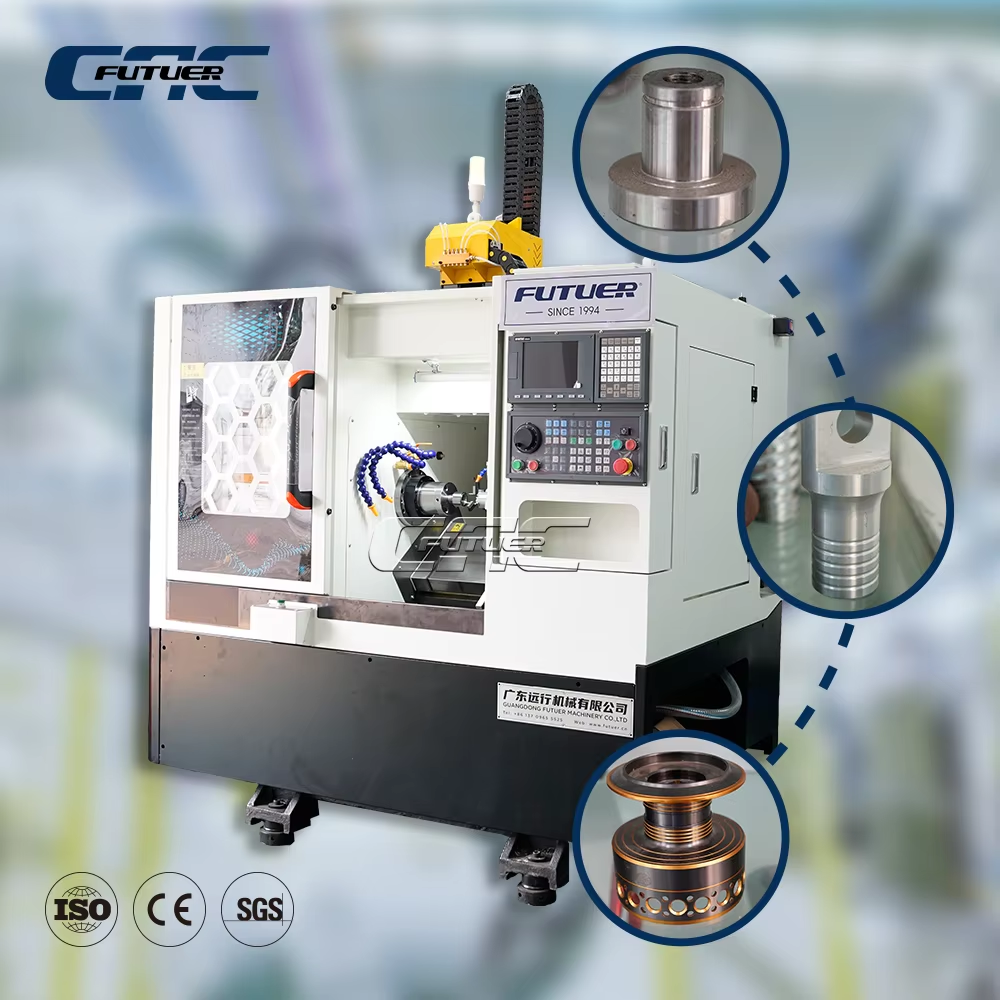
Why Slant Bed CNC Lathes Are the Foundation of High-Efficiency Horizontal Turning
Design Advantages: Rigidity, Thermal Stability, and Natural Chip Evacuation
The slant bed CNC lathe features an inclined bed—typically set between 30° and 60°—that delivers superior structural rigidity compared to flat-bed designs. This geometry distributes cutting forces more evenly across the machine frame, minimizing vibration and mitigating thermal distortion during extended production runs. Crucially, the slope enables chips to fall freely into the conveyor system rather than accumulating on ways or around the tooling. That natural chip evacuation reduces manual cleaning time by approximately 40%, eliminating operator interruptions and sustaining consistent output. The result is a thermally stable, vibration-damped platform capable of holding tight tolerances hour after hour—making slant beds the de facto standard for high-efficiency horizontal turning.
Real-World Impact: 32% Cycle Time Reduction in Automotive Axle Housing Machining
A Tier 1 automotive supplier replaced legacy flat-bed lathes with a slant bed CNC lathe to produce axle housings—a high-precision application requiring deep cuts and strict dimensional control. Leveraging the machine’s inherent rigidity, engineers increased cutting speeds while preserving surface integrity. Simultaneously, uninterrupted chip flow eliminated mid-cycle cleaning stops, saving roughly 20 minutes per shift. Across full production cycles, these improvements delivered a 32% reduction in total machining time per part. Additional benefits included fewer tool changes and a measurable drop in scrap rate—confirming that the slant bed’s foundational design translates directly into throughput gains in demanding, high-volume environments.
Multi-Axis Integration: Eliminating Setups with Simultaneous Milling and Turning
How Y-Axis Live Tooling Enables Complete Part Machining in One Setup
Y-axis live tooling converts a horizontal turning center into a true turn-mill platform. With vertical (Y-axis) tool movement synchronized to spindle rotation, operators can perform drilling, tapping, and contour milling without unclamping the workpiece. When built on a rigid slant bed foundation, this configuration absorbs dynamic cutting forces from both turning and milling operations—maintaining micron-level positional accuracy across all features. The integration eliminates secondary operations, removing the need for dedicated milling machines or manual part transfers. Complex components like pump impellers and automotive hubs are now completed in a single clamping cycle. Fewer setups reduce handling errors, prevent re-fixturing-induced distortion, and shorten lead times. A unified CAM program streamlines programming and accelerates first-article approvals.
Uptime Economics: Reducing Labor, Fixture Costs, and Quality Variability
Integrating milling and turning into one setup significantly improves machine utilization. Each eliminated setup removes 15–30 minutes of changeover time—recovering hours of productive spindle time weekly. Labor requirements decrease as fewer operators are needed to manage inter-process transfers and re-fixturing. Fixture investment drops substantially: instead of multiple dedicated holding solutions, a single chuck or collet secures the part from roughing through final finish. Most critically, maintaining a constant datum throughout all operations eliminates cumulative positioning errors. Dimensional repeatability improves markedly, reducing quality-related rework and inspection bottlenecks. The net effect is lower cost per part, higher equipment uptime, and more predictable output—key enablers for lean and just-in-time manufacturing strategies.
Smart Automation: AI and Industry 4.0 Integration for Predictive Efficiency Gains
Adaptive Machining: AI-Driven Feedrate Optimization and Tool Wear Compensation
Advanced AI systems embedded in modern slant bed CNC lathes continuously monitor real-time spindle load, vibration signatures, and thermal profiles. As tool wear progresses, machine learning algorithms dynamically adjust feedrate and spindle speed to preserve surface finish and dimensional accuracy—extending tool life by up to 25% in high-volume applications. These adaptive responses eliminate manual intervention for offset corrections, enabling longer unattended runs and reducing unplanned downtime. Consistent process control also lowers scrap rates and stabilizes cycle times, allowing manufacturers to schedule maintenance based on actual tool condition—not arbitrary intervals—thereby improving overall equipment effectiveness (OEE).
MES-Connected Workflows: Real-Time Cycle Time Analytics via OPC UA Controllers
Today’s slant bed lathes integrate natively with Manufacturing Execution Systems (MES) using OPC UA communication protocols. This connection streams live data—including cycle time, idle duration, alarm logs, and power consumption—to enterprise dashboards. Supervisors gain immediate visibility into production performance and can pinpoint bottlenecks—for example, detecting subtle increases in load time that signal early-stage mechanical wear. Proactive alerts trigger preventive maintenance before failures occur, while historical analytics reveal recurring inefficiencies, guiding targeted program optimization and fixture refinement. By closing the feedback loop between machine-level execution and enterprise planning, this Industry 4.0 capability transforms each lathe into a smart, self-optimizing node—continuously elevating shop-floor efficiency and responsiveness.
FAQs
What is a slant bed CNC lathe?
A slant bed CNC lathe is a turning machine with an inclined bed—typically angled between 30° and 60°—designed to enhance structural rigidity, natural chip evacuation, and thermal stability during machining.
What are the advantages of slant bed designs over flat-bed lathes?
Slant bed designs provide superior rigidity, improved chip evacuation, reduced manual cleaning times, and better vibration damping, leading to more consistent machining performance and tighter tolerances.
How does Y-axis live tooling improve efficiency?
Y-axis live tooling allows simultaneous milling and turning operations in a single clamping, eliminating secondary setups and reducing labor, time, and potential errors while improving dimensional accuracy.
What role does AI play in slant bed CNC lathes?
AI systems monitor real-time machine conditions, adjusting parameters like feedrate and spindle speed to optimize tool life, reduce downtime, and improve surface finish and overall productivity.
How does MES integration benefit slant bed CNC operations?
MES integration enables real-time monitoring of cycle times, idle durations, and maintenance needs, allowing proactive decision-making, better efficiency, and smarter workflows on the production floor.