
 EN
EN
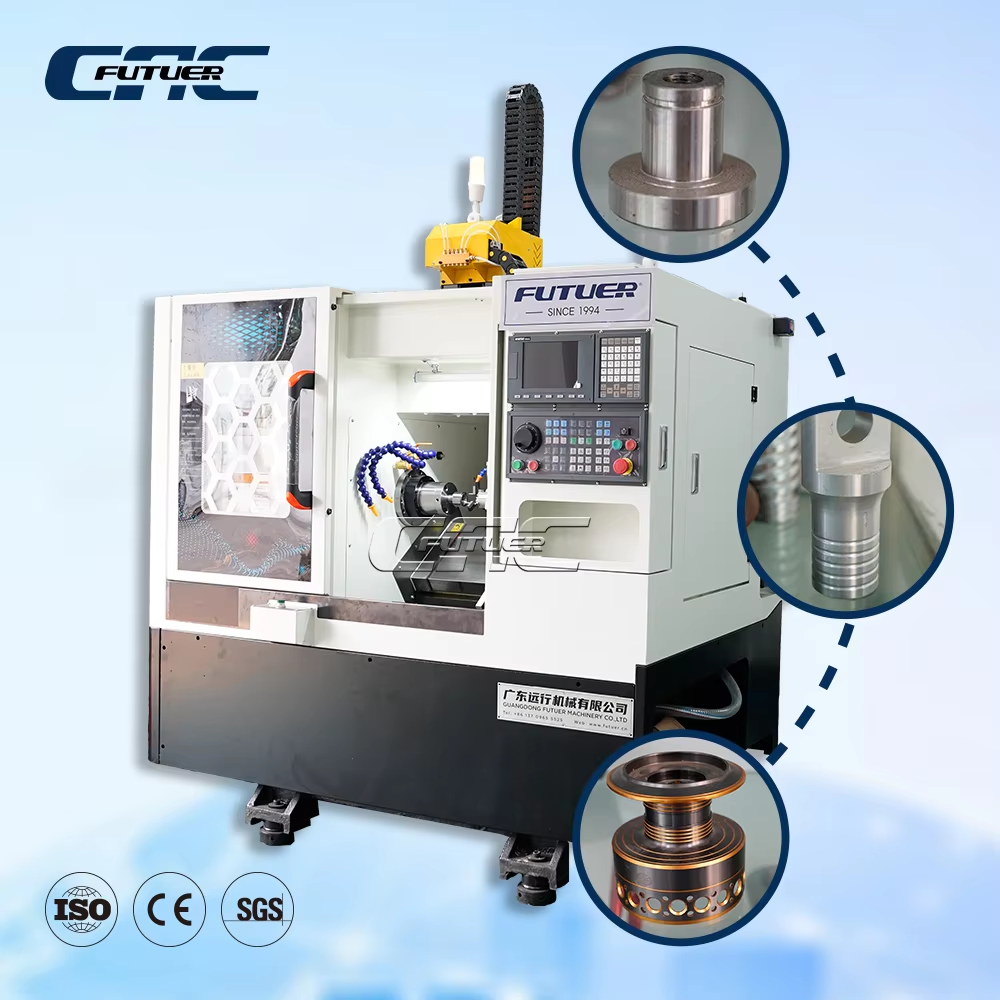
Understanding CNC Turning Centers and Their Role in Modern Manufacturing
Defining Precision Metal Machining with CNC Turning Centers
CNC turning centers are basically the gold standard when it comes to precision metal machining. They work by rotating the workpiece while computer controlled cutting tools shape various metals including steel, titanium, and different aluminum alloys. What sets them apart from old school manual lathes is their reliance on G-code programming which allows for incredibly detailed operations. The machines can achieve tolerances below 2 micrometers, which is about 1/50th the thickness of a single strand of hair. Because they handle repetitive tasks without human mistakes, these CNC systems have become essential equipment across many industries where precision matters most. Think about things like aircraft bearings or surgical implants where even tiny errors just won't cut it.
Evolution of CNC Turning Machines in Modern Manufacturing
From their origins as 19th-century engine lathes to today’s smart manufacturing systems, CNC turning machines have undergone three transformative phases:
- 1950s–1970s: Introduction of punch-tape numerical controls
- 1980s–2000s: Integration of CAD/CAM software and servo motors
- 2010s–Present: Implementation of IoT sensors and machine learning algorithms
Modern CNC turning centers now achieve 98.7% operational uptime through predictive maintenance systems (Machinery Today, 2023), a 300% improvement over 1990s counterparts.
Advances in Accuracy and Precision Through Digital Control
Switching from old school analog controls to modern digital systems cut down on geometric errors by almost 90% over the past four decades. These days, real time tool path corrections handle thermal expansion issues automatically while machining parts. This means machines stay accurate even when working with tough alloys at temperatures around 1,200 degrees Fahrenheit. The latest tech includes laser guided tool alignment that gets surfaces down to Ra 0.2 microns roughness, which is super important for those tiny hydraulic fittings used in wind turbines and solar panel installations across the country.
Multi-Axis CNC Turn/Mill Centers: Enabling Complex, High-Precision Geometries
Simultaneous Multi-Axis Control for Complex Part Geometries
Today's 5 axis CNC turning centers work by syncing movement across X, Y, Z plus two rotational axes (A and B) to carve out complex shapes all in one go. The big advantage here? No need for those tedious manual adjustments that often throw off measurements. Most shops can hit around +/- 2 microns accuracy these days according to Thomasnet research from last year. Look at what this means for real world applications. The aerospace sector has been making serious strides lately, crafting turbine blades and fuel system parts with curved surfaces and undercuts that just weren't possible back when everyone was stuck with basic 3 axis machines. These new capabilities are changing how manufacturers approach design constraints altogether.
Integration of Milling and Drilling Operations in CNC Turning Centers
The convergence of milling and drilling functions within CNC turning centers reduces production bottlenecks by 30% in high-mix environments. These hybrid systems perform thread milling, cross-drilling, and contouring operations without transferring workpieces between machines. A 2024 industry analysis found integrated turn/mill centers reduced secondary processing for automotive transmission shafts by 58%.
Live Tooling and High-Speed Machining Advancements
Live tooling stations with 15,000 RPM capabilities enable real-time transitions between turning and milling operations. Combined with vector-based toolpath optimization, these advancements reduce cycle times by 22% for medical implant components requiring micro-grooves and biocompatible surface finishes.
Case Study: Multi-Axis Machining Reducing Production Steps by 40%
A manufacturer of hydraulic valves implemented 5-axis CNC turning centers with robotic part handling, consolidating 7 traditional machining stages into 4. This reduced setup errors by 90% while increasing monthly output by 1,200 units. The system’s C-axis contouring capabilities proved critical for maintaining ±0.005mm tolerances on hardened steel components.
Achieving Unmatched Precision and Efficiency in High-Volume Production
Balancing Speed and Precision in High-Volume CNC Turning Runs
Modern CNC turning centers achieve production speeds exceeding 400 parts/hour while maintaining ±0.005 mm tolerances through advanced servo motor control and real-time toolpath optimization. Automated in-process gauging systems validate dimensional accuracy every 50 cycles, reducing scrap rates to <0.8% in automotive shaft production (Journal of Advanced Manufacturing, 2024).
Integrated Automation and Robotic Part Handling in CNC Turning Centers
Six-axis collaborative robots now achieve 98% uptime in high-volume production cells, performing seamless part transfers between twin spindle lathes and CMM stations. This integration reduces human intervention to 15 minutes per 8-hour shift while maintaining ISO 2768-mK tolerances on aerospace fasteners.
Trend Analysis: Lights-Out Manufacturing Powered by CNC Automation
Leading manufacturers have increased night shift productivity by 60% through automated pallet changers and tool-life monitoring systems. Predictive maintenance algorithms analyze 200+ machine parameters to schedule tool replacements within 15-minute windows, enabling 22-hour daily operation cycles.
From Design to Production: Reducing Cycle Time by 25% via CAD/CAM Integration
Direct CAD-to-G-code workflows now eliminate 83% of manual programming time through AI-driven feature recognition. A recent implementation at Tier 1 suppliers reduced complex medical implant production timelines from 14 hours to 10.5 hours per batch while maintaining 4 µm surface finishes.
Machining High-Strength Materials: Overcoming Challenges in Titanium and Inconel
Challenges in CNC Machining of High-Strength Materials Like Titanium and Inconel
Working with aerospace grade titanium and those tough nickel based superalloys such as Inconel on a CNC turning center brings about some real headaches for machinists. There are basically three main problems they face when dealing with these materials. First off, tools tend to wear down really fast because of all the abrasive chips produced during cutting. Then there's the issue of extreme heat buildup, sometimes reaching temperatures over 1800 degrees Fahrenheit which can damage both tools and parts. And finally, the workpieces themselves get harder as they're machined due to the intense friction involved. According to research published last year in an aerospace manufacturing journal, these difficult materials actually create cutting forces that are almost 2.5 times greater than what we see with regular steel. This makes achieving accurate dimensions especially challenging when working on intricate aerospace components where even tiny deviations matter.
Tool Wear Mitigation and Thermal Management Strategies
Advanced CNC turning centers combat these issues through adaptive toolpath algorithms that reduce engagement angles by 15–25% during heavy cuts. High-pressure coolant systems (1,500+ psi) dissipate heat 40% faster than traditional flood cooling, while cryogenic machining techniques lower cutting zone temperatures by 300–400°F (149–204°C).
Data Point: 30% Increase in Tool Life With Coated Carbide Inserts (Sandvik, 2023)
Recent research demonstrates how AlTiN-coated carbide inserts with microgroove textures reduce flank wear by 30% compared to uncoated tools when machining Inconel 718 at 200 SFM (61 m/min).
High-Performance Cutting Tools and Advanced Materials Enabling Tighter Tolerances
Next-generation ceramic inserts and CVD diamond-coated tooling now achieve surface finishes below 16 µin (0.4 µm) on titanium components, maintaining ±0.0002" (0.005 mm) positional accuracy through 8-hour production runs in fully automated CNC turning systems.
Key Industry Applications: Automotive, Aerospace, and Medical Advancements
CNC Turning in the Automotive Industry: Engine Components and Transmission Shafts
Modern CNC turning centers achieve remarkable accuracy when manufacturing essential automotive components such as fuel injectors, transmission shafts, and turbocharger housings. These machines keep tolerances around plus or minus 0.005 millimeters, which means far less need for additional finishing work after machining. Most importantly, they maintain consistent dimensions throughout large production batches, typically hitting close to 99.8% uniformity. Many automotive manufacturers now rely on live tooling CNC systems that combine milling and drilling operations in one setup. This integration saves significant time on the shop floor, with production cycles often shortened between 20 and 35 percent compared to older manufacturing techniques.
Aerospace Demand for Precision and Reliability in Turbine and Structural Parts
In aerospace manufacturing shops across the country, machinists depend heavily on those fancy multi-axis CNC turning centers to get those super precise cuts needed for titanium turbine blades and all sorts of aluminum structural parts down to the micron level. The latest numbers from the 2024 Aerospace Manufacturing Report show something interesting too - when working with those tough nickel alloys for jet engines, using coolant-through tooling cuts down thermal distortion problems by around 40%. And what does that mean practically? Components last longer before failing under stress, giving manufacturers about a 15% boost in fatigue resistance. Makes sense really, since jet engines don't exactly run at idle speeds all day long.
Medical Industry Requirements for Biocompatible, Micro-Precision Components
Modern CNC turning centers are making their mark in producing FDA approved surgical tools as well as titanium spinal implants that meet surface finish requirements below 0.4 microns Ra. As healthcare continues its move towards personalized medical devices for individual patients, manufacturers need to adapt their machining approaches. Five axis CNC machines have proven capable of creating features as small as 50 microns on those complex cobalt chrome coronary stents. Keeping everything clean and tracking materials throughout production is absolutely critical too. These practices help maintain the strict quality control needed to satisfy ISO 13485 certification requirements across the industry.
Controversy Analysis: Onshoring vs. Offshoring High-Precision Medical Machining
While 68% of medical OEMs cite supply chain risks in offshore machining, reshoring costs remain prohibitive for 43% of mid-sized manufacturers (MedTech Intelligence 2023). Hybrid strategies are emerging, with domestic CNC facilities handling final precision machining while outsourcing roughing operations–balancing cost and quality control.
FAQ
What is the main advantage of CNC turning centers compared to manual lathes?
CNC turning centers offer precision metal machining with tolerances below 2 micrometers, compared to manual lathes. They leverage G-code programming which allows for detailed operations and greater operational efficiency by reducing human error.
How have modern CNC turning machines evolved?
Modern CNC turning machines have evolved through the use of punch-tape numerical controls in the 1950s-70s, CAD/CAM software and servo motors in the 1980s-2000s, and the integration of IoT sensors and machine learning algorithms from the 2010s onwards.
What makes multi-axis CNC turn/mill centers notable?
These centers can synchronize movements across multiple axes to shape complex geometries without the need for manual adjustments, improving precision and efficiency, particularly valuable in sectors like aerospace.
Why is integrating milling and drilling in CNC turning centers beneficial?
This integration reduces production bottlenecks and secondary processing needs, greatly improving efficiency in high-mix environments and facilitating streamlined workflows.
What are the main challenges of machining high-strength materials like titanium and Inconel?
The primary challenges include rapid tool wear, heat build-up that can damage both the tool and workpieces, and the increasing hardness of workpieces due to the intense friction during machining.
Table of Contents
- Understanding CNC Turning Centers and Their Role in Modern Manufacturing
- Multi-Axis CNC Turn/Mill Centers: Enabling Complex, High-Precision Geometries
- Achieving Unmatched Precision and Efficiency in High-Volume Production
- Machining High-Strength Materials: Overcoming Challenges in Titanium and Inconel
-
Key Industry Applications: Automotive, Aerospace, and Medical Advancements
- CNC Turning in the Automotive Industry: Engine Components and Transmission Shafts
- Aerospace Demand for Precision and Reliability in Turbine and Structural Parts
- Medical Industry Requirements for Biocompatible, Micro-Precision Components
- Controversy Analysis: Onshoring vs. Offshoring High-Precision Medical Machining
-
FAQ
- What is the main advantage of CNC turning centers compared to manual lathes?
- How have modern CNC turning machines evolved?
- What makes multi-axis CNC turn/mill centers notable?
- Why is integrating milling and drilling in CNC turning centers beneficial?
- What are the main challenges of machining high-strength materials like titanium and Inconel?