
 EN
EN
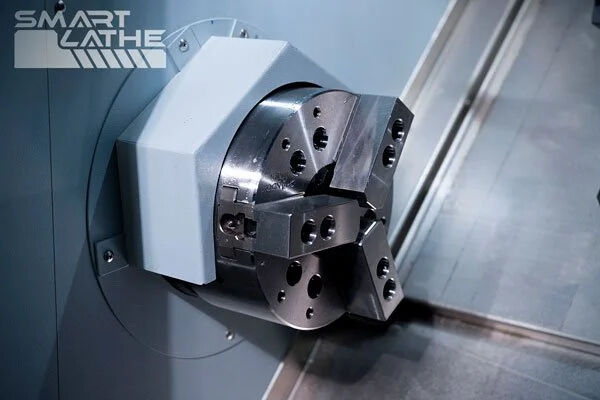
Core Capabilities of Modern CNC Turning Machines for Complex Geometries
Multi-Axis Synchronization and Live Tooling for Milling, Drilling, and Off-Center Features
Today's CNC turning machines go well beyond simple cylinder shaping by adding multiple axes (usually Y and C) along with live tooling capabilities. What does this mean? These machines can now perform milling, drilling, and threading all at once while working against the main rotation axis. With everything happening in one setup, manufacturers get radial holes, flat surfaces, or keyway cuts as the part spins on the machine. This cuts down on extra steps and alignment problems too - studies show around a 68% reduction according to machining reports from 2024. The real magic happens when those different axes talk to each other in real time through something called MTConnect. This keeps things accurate even when tools change direction suddenly, staying within about 0.005 mm tolerance. For parts like airplane components or medical devices that need complex angles and off-center features, these advanced machines make production possible where older equipment would fail completely.
| Technology | Key Capabilities | Complexity Handling |
|---|---|---|
| CNC Turning/Mill-Turn | Live-tooling, synchronized spindles, tight concentricity | Cylindrical + prismatic geometry |
| 3-Axis Milling | Deep-cavity strategies, step-down milling | Multi-surface contours |
| 5-Axis Milling | Multi-angle cutting, adaptive clearing | Undercuts, organic shapes |
Handling Cylindrical, Contoured, and Asymmetric Parts in a Single Setup
Modern CNC turning centers handle complex shapes that aren't just round by incorporating features like programmable tailstocks, secondary spindles, and tools that spin in opposite directions. The CAM software these machines run includes smart path planning that keeps everything stable when cutting curved surfaces or mixed geometry parts such as those seen in turbine blades. What's really impressive is how one setup can go from shaping a bearing surface to creating coolant passages in an off-center camshaft, which cuts down on the number of times parts need to be repositioned during manufacturing automotive transmissions. These machines have strong frames and built-in temperature adjustment systems that fight against metal bending during tough cuts on hard materials like certain types of stainless steel, keeping dimensions accurate within very tight ranges. All this capability means engineers can now design parts that were once impossible to make because traditional methods couldn't handle them.
Achieving and Sustaining Tight Tolerances on a CNC Turning Machine
Sub-5 μm Accuracy: Role of Machine Rigidity, Thermal Compensation, and High-Precision Spindles
Getting down to sub-5 micrometer precision on today's CNC turning machines isn't magic, it's just really good engineering put together properly. The base materials matter a lot too - polymer concrete combined with structures designed to absorb vibrations gives those machines rock solid stability, so tools don't wobble when making deep cuts into metal. Most shops will tell you about their real time thermal compensation systems that constantly adjust for heat expansion in spindles and ball screws, keeping everything aligned within about plus or minus 2 microns even when车间 temperatures swing around. And let's not forget about hydrostatic spindles, which have runout below 0.1 microns, something that makes all the difference when machining parts that need perfect roundness. These combined technologies allow manufacturers to hit tolerances better than 5 microns for parts used in places like aircraft engines or hip replacements, where a tiny measurement error can mean big problems later down the line.
Beyond the Cut: Why Fixture Stability, Workholding, and Material Behavior Drive 92% of Tolerance Failures
Just having good machines isn't enough to maintain consistent precision over time. Research indicates that problems with fixtures and how materials behave actually cause around 92% of those pesky tolerance issues. When working with hydraulic chucks and custom jaws, getting an even clamping force matters a lot, especially when dealing with things like thin walls or parts that don't hold their shape well under pressure. Different materials expand at different rates too. Take aluminum for instance it expands about 23 micrometers per meter per degree Celsius. That means shops need proper environmental controls and smart programming adjustments. For stuff made from non-ferrous metals or delicate components, vacuum chucks or magnetic fixtures can be better options since they tend not to deform the workpiece. If manufacturers ignore all these factors before machining starts, no matter how fancy their CNC turning equipment is, they'll still struggle with getting consistent results from one production run to the next.
Integrating Real-Time Metrology to Control Variation in CNC Turning Processes
In-Process Probing and Adaptive Compensation Loops Reducing Rework by 68%
When real time metrology gets applied to CNC turning, it changes everything from just a basic process to something that actually responds and fixes itself along the way. The system uses built in probes to check important measurements while the machine is running, and smart software keeps adjusting where tools go and how fast they move to handle issues like heat expansion, worn tools, or when parts start bending unexpectedly. According to research published last year in Precision Manufacturing Journal, these systems cut down on needing to fix things after the fact by about two thirds because problems get spotted early on. What manufacturers really appreciate is no longer having to stop production for those tedious manual checks between steps. They also get consistent results within plus or minus 2 microns thanks to automatic adjustments, plus ongoing monitoring of tool condition. Modern machines come equipped with multiple sensors watching out for things like motor strain, shaking, and temperature changes so they can predict when something might go off track. For shops dealing with complicated turning jobs, this kind of control means fewer wasted materials and faster production times overall.
FAQ Section
What are the key benefits of using CNC turning machines for complex geometries?
CNC turning machines offer multi-axis synchronization, live tooling, and real-time metrology, allowing simultaneous milling, drilling, and threading while maintaining tight tolerances.
How do modern CNC machines maintain sub-5 micrometer precision?
These machines utilize polymer concrete for stability, real-time thermal compensation systems, and hydrostatic spindles to minimize vibrations and heat expansion, keeping high precision consistently.
Why is fixture stability important in CNC machining?
Fixture stability ensures even clamping force, reducing tolerance issues caused by material behavior, which is crucial for maintaining precision especially with thin or delicate components.
How does real-time metrology reduce rework in CNC turning?
Real-time metrology uses in-process probing and adaptive compensation loops to detect and correct errors early, cutting down on rework by spotting problems before they occur.