
 EN
EN
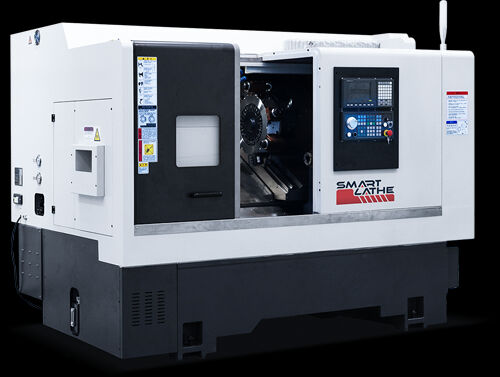
Daily Preventive Maintenance for Reliable CNC Turning Machine Operation
Visual Inspection and Control Panel Diagnostics
Starting every shift with a quick 5 minute look around makes good sense. Operators should check for any signs of trouble like hydraulic fluid leaks, bolts that have come loose over time, or machines vibrating in ways they shouldn't. Make sure those red emergency stop buttons can actually be pressed without anything blocking them. Take a moment to glance at the control panel too, looking out for any blinking lights or error messages that might indicate problems. Writing down even small oddities matters a lot. Things like strange grinding sounds or displays that flicker occasionally often point to bigger issues waiting to happen. Industry data suggests these regular checks cut down unexpected equipment failures by about 30 percent, though real world results vary depending on maintenance practices across different facilities.
Cleaning Chips, Debris, and Coolant Residue from Critical Zones
Remove metal chips and coolant residue daily from:
- Turret and tool holder grooves
- Chip conveyor pathways
- Coolant tank filters and nozzle tips
Use compressed air to clear debris from ball screws and guideways. Left unchecked, residual coolant promotes corrosion—especially at spindle interfaces—accelerating wear and compromising repeatability.
Verifying Emergency Stops, Door Interlocks, and Safety Sensors
Test safety systems through controlled activation:
- Trigger each emergency stop to confirm immediate halting
- Open access doors during simulated operation to validate automatic shutdown
- Verify light curtains and pressure mats respond consistently to obstructions
Fully functional safeguards prevent injury, protect equipment integrity, and support ongoing OSHA compliance.
Lubrication and Coolant System Management for CNC Turning Machine Longevity
Validating Automated Lubrication Cycles and Ball Screw Grease Integrity
Keeping bearings running smoothly starts with good automated lubrication systems. Maintenance staff should check regularly that the metering units are putting out the right amount of grease onto those linear guides and ball screws roughly every 8 to 12 hours depending on workload. When looking at the grease itself, watch out for any changes in texture or color. If it gets hard, separates into oil and solids, or turns dark, that means trouble ahead since bad lubricant can cause parts to wear down about 40% faster according to industry reports from last year. For machines operating in dusty workshops, remember to run those purge cycles on the ball screws periodically to get rid of built-up dirt. Thermal imaging cameras have become pretty standard equipment these days, allowing technicians to spot areas where lubrication might be lacking long before they start causing problems with component tolerances and finished product quality.
Maintaining Coolant Filtration, pH Stability, and Microbial Control
Well-managed coolant extends tool life by up to 200% in precision CNC turning. Implement three-tier filtration:
- Mechanical filters capture particles >50 microns
- Magnetic separators remove ferrous fines
-
Centrifugal systems eliminate tramp oil
Test pH bi-weekly: values below 8.5 accelerate corrosion; above 9.2 increase operator skin irritation risk. Microbial growth degrades coolant performance by 30% within four weeks—monitor biocide concentration monthly using refractometers. For hard water sources, reverse osmosis pre-treatment prevents mineral scale buildup in spindle cooling jackets.
Spindle and Toolholding System Care to Preserve CNC Turning Machine Accuracy
Taper Cleanliness, Runout Verification, and HSK/ISO Interface Inspection
Spindle tapers often get contaminated with things like coolant residue or chips stuck in the grooves, which leads to problems with alignment, tools slipping out during operation, and loss of precise positioning. After switching jobs, it's good practice to wipe down both the spindle and the toolholder tapers using clean, lint-free cloths. When looking at HSK or ISO connections, take time to check them closely with a magnifying glass for any signs of scratches or small dents that might affect performance. For measuring taper runout, grab a dial indicator and watch those numbers carefully anything over 0.0005 inches means there's either dirt buildup or actual damage happening. Don't forget to check the pull studs too these little components are absolutely essential for keeping tools securely attached when running at high speeds, so regular inspection can help avoid disastrous tool ejections mid-operation.
Spindle Bearing Temperature Monitoring and Vibration Trend Analysis
According to Machinery Journal from 2023, about one third of all dimensional errors in precision turned parts actually come down to thermal expansion problems in spindle bearings. To get a handle on this, it makes sense to establish some kind of thermal baseline first. Record what happens when the machine is just sitting there versus when it's under load, maybe once a week. If things start drifting more than 15%, someone should probably take a closer look. When running those heavy cutting operations, throw in some wireless vibration sensors too. They pick up on those frequency patterns that tell stories about what's going on inside. Looking at monthly spectral data can spot trouble spots early enough. Watch out for those low frequency harmonics creeping upward - they tend to show up right before bearings start wearing out. Before tackling any job with really tight tolerances, run through some thermal stabilization routines. This helps reduce distortion caused by heat buildup. Keeping good records of all these measurements isn't just paperwork either. It forms the basis for smarter maintenance scheduling, which extends spindle life by around 40%. And let's face it, nobody wants to deal with breakdowns that end up costing upwards of $28k for repairs and lost production time.
Optimizing CNC Turning Machine Parameters and Workholding for Sustained Performance
Getting the right spindle speed, feed rate, and toolpath strategy makes all the difference for both how long parts take to make and their final quality. When parameters are properly set, shops often see cycle times drop around 22% plus get better tool life out of their equipment. Look for toolpaths that keep the machine moving when it's not actually cutting metal, and try climb milling whenever possible if the material allows it since this reduces cutting forces significantly. Workholding matters too - match what's needed based on part shape. Hydraulic chucks work great for big production runs because they maintain steady pressure across multiple pieces. Collet systems are better suited for those long, skinny bars where concentricity counts. Don't overlook fixturing either. A solid setup keeps vibrations from messing with the machine bearings and ruining surface finishes. Check chuck pressure and jaw alignment with dial indicators at least once a month. Believe it or not, just 0.01mm of runout can lead to dimensional issues as bad as 0.05mm in finished parts. And remember to adjust coolant nozzles every three months so they hit exactly where needed during cutting operations. This helps prevent warping problems especially common with thin walls.
FAQ
Why is regular visual inspection important for CNC machines?
Regular visual inspection helps identify early signs of wear or damage, preventing potential failures and reducing unexpected downtime.
What role does cleaning play in CNC machine maintenance?
Cleaning removes chips and coolant residue, preventing corrosion and ensuring the precision of the machine's components.
How does proper lubrication extend the life of CNC machines?
Proper lubrication reduces friction and wear, ensuring smooth operation and extending the lifespan of components.
Why is monitoring coolant pH levels crucial?
Maintaining the correct pH level prevents corrosion, improves tool life, and minimizes risks of skin irritation for operators.
How can optimizing machine parameters improve performance?
Optimized parameters reduce cycle times, improve tool life, and ensure high-quality finished parts, boosting overall efficiency.
Table of Contents
- Daily Preventive Maintenance for Reliable CNC Turning Machine Operation
- Lubrication and Coolant System Management for CNC Turning Machine Longevity
- Spindle and Toolholding System Care to Preserve CNC Turning Machine Accuracy
- Optimizing CNC Turning Machine Parameters and Workholding for Sustained Performance
- FAQ