
 EN
EN
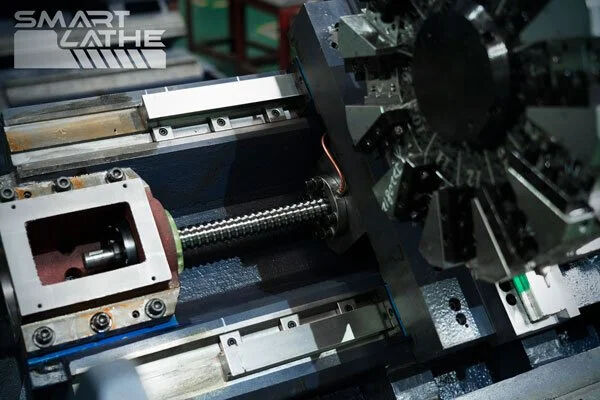
Core Spindle Design Elements Affecting CNC Turning Machine Rigidity and Precision
Bearing Selection: Impact on Radial Stiffness, Axial Runout, and Long-Term Repeatability
Angular contact bearings are known for their ability to handle radial forces when cutting materials, which helps keep parts from warping or deforming. Tapered roller bearings work alongside these to boost axial load handling capabilities something that becomes really important during operations like face turning or threading where forces push against the bearing surfaces. Getting axial runout down to less than 1 micron makes all the difference in keeping tools on track and ensuring dimensions stay within tight tolerances around plus or minus 0.005 mm. Switching to ceramic hybrid bearings can actually double the lifespan compared to traditional steel versions according to recent studies published in Machinery Journal last year. These ceramics cut down on unexpected downtime too. For applications requiring absolutely smooth surfaces, hydrostatic bearings take things even further by completely removing direct metal contact between moving parts. This eliminates vibrations that cause machining errors and allows for finishes as fine as Ra 0.4 microns making them perfect for precision optical components or delicate medical devices where surface quality is paramount.
Motor Integration Strategies: Optimizing Speed-Torque Curves While Managing Thermal Expansion in CNC Turning Machine Spindles
Direct drive motors get rid of gear backlash problems and provide steady torque throughout the entire 500 to 8,000 RPM range needed when working with tough materials and doing precision finishing work. The cooling systems built into these motor housings fight against thermal expansion issues too. According to some recent studies from Precision Engineering Report back in 2023, even a small temperature increase of just 5 degrees Celsius can actually shift critical spindle positions by about plus or minus 0.002 millimeters. When cutting through tough material, flux vector control keeps torque stable within around 2% of what's expected. And those laminated stator cores? They really help cut down on those pesky eddy current losses that waste so much energy. Synchronous motor designs hit impressive efficiency levels at around 95%, plus they manage heat removal about 30% better than their asynchronous counterparts. This means machines can run longer at higher duty cycles without worrying about overheating and losing performance.
Thermal Management Systems for Consistent Dimensional Accuracy in CNC Turning Machine Operations
Quantifying Thermal Drift: How a 5°C Rise Causes ±0.002 mm Accuracy Loss in High-Precision CNC Turning
Thermal expansion continues to plague high precision CNC turning operations as a major source of errors. When temperatures rise by just 5 degrees Celsius across critical components like ball screws, spindle housings, and linear guideways, machines start drifting positionally beyond acceptable tolerances (around ±0.002 mm). This matters a lot for industries working with tight specs such as aerospace parts manufacturing, medical device production, and optical component fabrication where getting measurements right down to the micron counts for product quality. Some shops install real time thermal sensors inside spindles and other structural areas so their control systems can tweak tool paths on the fly when needed. But there are definite limits to what sensors can do. At speeds above 8,000 RPM, the heat generated from constant cutting simply overwhelms any reactive adjustments these systems make. That's why forward thinking about thermal management before machining even starts becomes absolutely essential for maintaining those critical tolerances.
Active Cooling (Liquid/Chiller) vs. Passive Solutions: Application-Specific Trade-offs for Sustained CNC Turning Machine Uptime
The choice between active and passive thermal regulation hinges on precision requirements, production volume, and infrastructure readiness:
| Factor | Active Liquid/Chiller Systems | Passive Systems |
|---|---|---|
| Accuracy Maintenance | Maintains ±0.001 mm tolerance in 24/5 production | Suitable for ±0.01 mm applications |
| Operating Cost | Higher energy and fluid-maintenance requirements | Minimal ongoing cost |
| Uptime Stability | Supports >90% duty cycles with stable thermal profiles | Typically limited to <70% duty cycles |
Liquid cooling systems actively pump specially cooled fluids through machine spindles and motor casings, cutting down heat-related warping by around 60% during tough operations such as machining titanium parts. For quick jobs or small batches run in controlled workshop settings, passive cooling techniques usually get the job done. These include things like heat insulating gaps, metal cooling fins, and just letting room air do some work. But when it comes to mass production where precision matters most, investing in active cooling pays off handsomely. The machines stay accurate longer, parts last better, and nobody has to stop production every time temperatures fluctuate enough to throw off measurements.
Dynamic Stability and Surface Quality: Vibration Control in High-Speed CNC Turning Machine Spindles
Critical RPM Thresholds and Modal Analysis: Mitigating Resonance Above 8,000 RPM to Achieve Ra < 0.4 µm Surface Finish
When spindles spin past 8,000 RPM marks, things start getting unstable which really impacts how good the surface looks and maintains its shape. Engineers run modal analyses during the design phase to find those natural resonance frequencies first. This helps them tweak the machine structure with things like stiffer housings, added mass dampers, or just moving weight around strategically so they don't hit those problematic frequency ranges when operating. If resonance isn't controlled properly, it creates these harmonic vibrations that lead to chatter problems. The surface finish gets worse than Ra 0.4 microns and can actually cause hidden damage inside materials such as Inconel or titanium alloys. By using bearings designed for maximum stiffness along with active damping systems, manufacturers have seen radial movement cut down by roughly 70 percent even at 12,000 RPM speeds. Modern machines now come equipped with vibration sensors that pick up on developing resonance issues as they happen, then automatically adjust the RPM settings to keep surfaces intact throughout long production cycles.
Matching Spindle Type to Material and Application Requirements for Optimal CNC Turning Machine Output
Getting the right spindle setup matters a lot when trying to balance how productive a machine is, how accurate it cuts, and how long tools last through different kinds of materials. For tough jobs like working with hardened steel or titanium, we need those heavy duty gear driven spindles that can handle massive cutting forces over 2500 MPa without bending out of shape. On the flip side, when dealing with aluminum or other soft metals, going for high speed direct drive spindles makes sense because they spin at speeds above 15,000 RPM. These let us achieve really smooth finishes under 0.4 microns Ra while keeping vibrations from messing things up. Composite materials are another story altogether. They require special spindles with built in dust collection systems and run at medium speeds between 8,000 to 12,000 RPM to stop layers from peeling apart and deal with all that abrasion. When we pair the wrong spindle with the material, tool life drops anywhere from 30% to 50%, and production cycles get slower by about 20%. Why? Because chips aren't formed properly and too much heat builds up during cutting. Thermal stability becomes super important with materials that don't conduct heat well. Even small temperature changes around 5 degrees Celsius can throw off dimensions in finished products by plus or minus 0.003 mm, which is way too much for most manufacturing specs.
FAQ
What type of bearings are ideal for reducing machining errors in CNC turning machines?
Angular contact bearings and hydrostatic bearings are highly effective in reducing machining errors. Angular bearings are good for handling radial forces, while hydrostatic bearings eliminate direct metal contact, reducing vibrations.
How do motor integration strategies affect CNC turning machine spindle performance?
Motor integration strategies, such as using direct drive motors and synchronous designs, optimize speed-torque curves and manage heat efficiently, providing consistent performance without overheating issues.
Why is thermal management crucial in CNC turning machine operations?
Thermal management is crucial because it ensures dimensional accuracy by mitigating thermal drift, which can cause positional drifting beyond acceptable tolerances.
What are the advantages of active cooling over passive solutions in CNC machines?
Active cooling systems maintain higher accuracy and stability with over 90% duty cycles, making them suitable for high precision work, while passive systems are cost-effective and sufficient for less precise applications.
How does spindle type selection impact CNC turning machine operations?
Choosing the right spindle type ensures optimal productivity, accuracy, and tool longevity. Different materials and job requirements necessitate specific spindle types for best performance.
Table of Contents
- Core Spindle Design Elements Affecting CNC Turning Machine Rigidity and Precision
- Thermal Management Systems for Consistent Dimensional Accuracy in CNC Turning Machine Operations
- Dynamic Stability and Surface Quality: Vibration Control in High-Speed CNC Turning Machine Spindles
- Matching Spindle Type to Material and Application Requirements for Optimal CNC Turning Machine Output
- FAQ