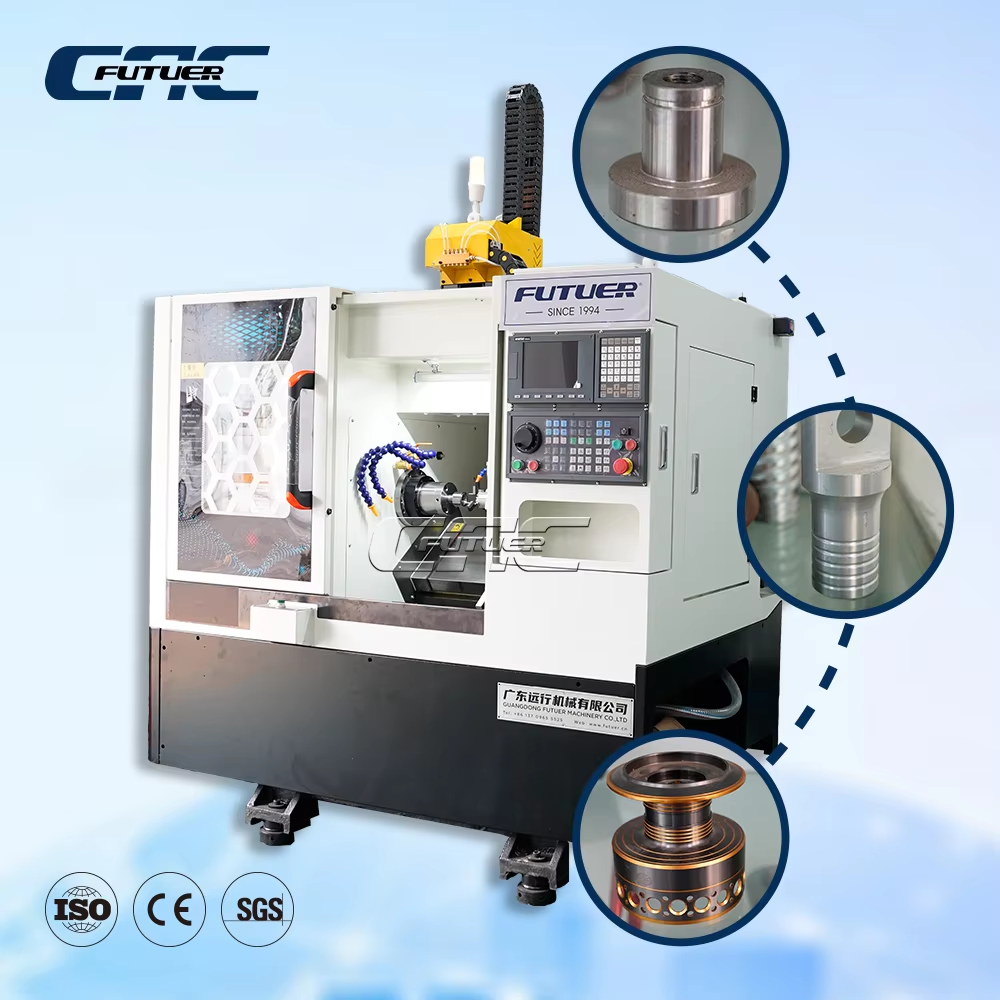
Master Your Machine: How Understanding the Parts of a CNC Lathe Unlocks Peak Performance
A comprehensive understanding of the core parts of a CNC lathe—from the headstock and spindle that provide the power, to the chuck, turret, and cutting tools that perform the work, all guided by the CNC controller—is fundamental to its application in precision manufacturing. This knowledge is not merely academic; it is the key to operational efficiency and troubleshooting. Knowing the role of the ball screw and guideways in ensuring precise axis movement, for instance, allows an operator to diagnose issues with surface finish or dimensional inaccuracy. This foundational understanding applies directly to selecting the right machine for a job, whether it's producing simple bushings on a basic 2-axis lathe or complex components on a multi-axis turning center with live tooling and a subspindle.
The application of this knowledge extends into optimizing production across critical industries. In the automotive sector, understanding how the turret and tool holders interface ensures rapid, reliable tool changes for high-volume production of shafts and pistons. For the medical industry, where parts are often small and made from exotic alloys, knowledge of the spindle's rotational accuracy and the tailstock's quill movement is crucial for holding micron-level tolerances on surgical bone screws and implant components. Similarly, in aerospace, mastering the interaction between the machine's rigid bed, the chuck, and the cutting tools is essential for safely and effectively machining high-strength, heat-resistant superalloys into robust landing gear components and engine parts.
Ultimately, deep familiarity with the parts of a CNC lathe has a direct application in strategic business outcomes: maximizing uptime, ensuring quality, and facilitating smart growth. Proficiency in preventive maintenance—such as monitoring way cover integrity or lubricating the ball screws—directly reduces costly unplanned downtime. Furthermore, this knowledge empowers businesses to make informed decisions about upgrades, like adding a bar feeder to the input system or a parts catcher to the output system to enable lights-out manufacturing. By investing in this operational intelligence, a shop transforms from simply running a machine to mastering a sophisticated manufacturing asset, driving continuous improvement and building a formidable competitive advantage.

 EN
EN