
 EN
EN
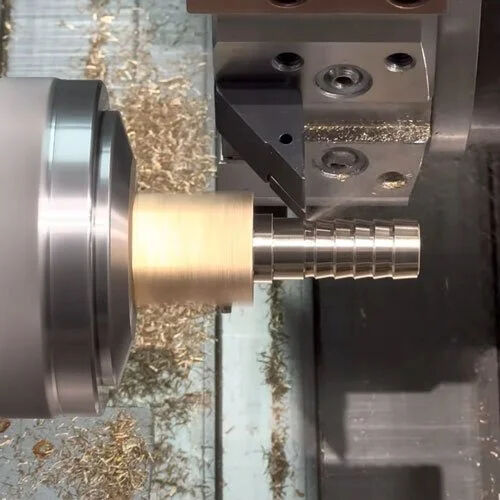
Understanding CNC Turning Centers: Core Capabilities and Machine Types
What is a CNC turning center and how does it differ from traditional lathes?
CNC turning centers automate rotational machining using programmed instructions, so operators don't need to constantly monitor like they do with manual lathes. Traditional lathes can only handle simple cylinder shapes, but modern CNC machines come equipped with live tools for milling and drilling tasks. These advanced systems typically have between three to nine axes of movement, which means complex parts can be made all at once without multiple setups. The benefits are pretty significant too. According to recent studies from the Precision Engineering Journal back in 2023, these automated systems cut down on human mistakes by almost half compared to what happens during manual work. Plus, they maintain incredibly tight tolerances around plus or minus 0.005 millimeters throughout production runs.
Types of CNC turning centers and their operational scope
Three primary configurations dominate industrial applications:
| Type | Key Features | Ideal Use Cases |
|---|---|---|
| Horizontal | Lower vibration, easier chip removal | Automotive components |
| Vertical | Gravity-assisted clamping | Large-diameter aerospace parts |
| Multi-Tasking | Combined turning/milling capabilities | Medical implants, fluid valves |
Horizontal models represent 68% of installations due to their versatility (IMTS 2024 Machinery Census). Vertical turning centers excel at handling heavy, short-axis workpieces where gravity aids in workholding. Multi-tasking mill-turn centers reduce part transfers by enabling simultaneous 5-axis operations, streamlining production of highly complex components.
Fundamental principles behind CNC turning operation and capabilities
All CNC turning relies on four core processes:
- Material Rotation: The workpiece spins at 100–3,500 RPM, depending on spindle specifications
- Tool Path Control: Programmable X/Z-axis movements with 0.1-micron resolution ensure precision
- Chip Formation: Carbide inserts remove material at feed rates between 0.05–0.5 mm/revolution
- Thermal Management: Minimum Quantity Lubrication (MQL) reduces heat generation by 60% compared to flood cooling
When optimized, these systems achieve an 89% first-pass yield rate in high-volume production (CNC Machining Association 2023 Benchmark), minimizing scrap and rework.
Evaluating Critical Technical Parameters for Performance and Precision
Key technical parameters (cutting speed, feed rate, depth of cut) and their impact on machining efficiency
Getting the right balance between cutting speed (SFM), feed rate (IPR), and depth of cut depends heavily on what material we're working with and what our tools can handle. Take hardened steel for instance—if operators push too hard on the speed settings, they'll often see insert life drop dramatically, sometimes as much as half in extreme cases. Recent work from last year showed some interesting results when shops focused on getting those numbers right for titanium parts. Shops managed to knock around 22% off their cycle times without compromising on how smooth the surfaces ended up or losing track of exact dimensions. Makes sense really, since proper setup means less wasted time and fewer rejects down the line.
Precision, accuracy, and tolerances in CNC turning: What levels are achievable?
Modern CNC turning centers routinely deliver positional accuracy within ±0.005 mm and surface finishes below 0.4 μm Ra. Aerospace components regularly meet AS9100 geometric tolerance standards of 0.0127 mm, with repeatability maintained within 0.0025 mm across production runs. Statistical process control (SPC) enables real-time detection of micron-level deviations, ensuring consistent quality.
Multi-axis CNC turn/mill centers capabilities and their role in complex part production
By integrating live tooling and Y-axis motion, multi-axis CNC turning centers perform milling, drilling, and tapping operations without removing the part. A 12-axis system can eliminate 70% of secondary operations in medical implant manufacturing while improving feature concentricity by 40% over conventional setups.
Are higher spindle speeds always better for precision? Debunking common misconceptions
Spindle speeds around the 15,000 RPM mark work great for getting those smooth surface finishes on aluminum parts, but when working with cast iron materials, these high speeds tend to create annoying harmonic vibrations that can really mess with stability during machining operations. Some studies indicate that instability issues might actually increase by about 35% under these conditions. For stainless steel cutting with carbide tools, most machinists find that keeping speeds somewhere between 250 to 350 surface feet per minute gives the best results. Push past that sweet spot though, and tool life drops off dramatically - roughly 60% shorter lifespan according to field tests - while there's no real improvement in either precision or how good the finished product looks.
Assessing Material Compatibility and Production Versatility
Material compatibility and machining of high-strength alloys using CNC turning centers
Modern CNC turning centers can handle a wide range of materials including common metals like aluminum and brass as well as tougher stuff such as titanium grade 5 and Inconel 718. According to recent industry data, around two thirds of manufacturing shops actually check material compatibility first thing when starting new projects, mainly to avoid those costly problems with tools wearing out too fast or parts failing early on. When working with titanium, machinists need to slow down the spindle speed by about forty percent compared to aluminum just to keep things cool enough during cutting operations. And then there's Inconel 718 which is particularly stubborn stuff requiring special carbide inserts if anyone wants decent surface finishes below that 0.8 micrometer Ra standard most quality control departments demand these days.
How machine versatility affects production flexibility across industries
CNC turning centers are pretty adaptable these days thanks to features like interchangeable bar feeders, live tooling options, and those fancy multi-axis programs. What does this mean in practice? Well, aerospace companies start their day machining tough 17-4PH stainless steel parts for airplane landing gears, then switch gears (literally) to work on PEEK thermoplastic prototypes for medical devices by afternoon. The ability to handle such different materials cuts down on machine downtime significantly when compared to older dedicated systems. Car makers have caught onto this trend too. They run the same equipment to produce hardened steel fuel injection components one week, then switch it up for copper composite housing units used in electric vehicle batteries the next. This flexibility means factories get more bang for their buck without having to invest in separate machines for every job.
Advanced Features and Industry 4.0 Integration for Future-Ready Operations
Live Tooling and Multi-Station Combined Machining (Mill-Turn Centers) for Reduced Cycle Times
Integrated live tooling allows CNC turning centers to perform milling, drilling, and tapping during rotation, eliminating manual repositioning. Multi-station setups enable parallel processing across independent work zones, significantly boosting throughput. These capabilities reduce cycle times by up to 40% for intricate parts such as aerospace fittings and surgical instruments.
AI, IoT, and Smart Monitoring: Enhancing CNC Turning Center Functionality
Predictive maintenance systems driven by artificial intelligence look at how spindles vibrate and track temperature changes to spot when parts are wearing down. These systems can catch problems before they happen with around 92% accuracy, which cuts down on those annoying unexpected shutdowns. The Internet of Things makes this possible through sensors that give instant readings back to operators. When running tough jobs like machining titanium, these sensors let machinists tweak feed rates on the fly so tools don't bend out of shape and surfaces stay smooth. Shops that have adopted this tech tell us their productivity jumps anywhere from 20 to maybe even 35% according to recent industry reports from folks who study manufacturing trends.
IoT and Industry 4.0 Integration in Modern CNC Turning Centers
| Traditional Systems | IoT-Enhanced Systems |
|---|---|
| Reactive maintenance | Predictive maintenance algorithms |
| Manual data collection | Real-time OEE (Overall Equipment Effectiveness) monitoring |
| Isolated machine operation | Cloud-based production scheduling |
Today’s CNC turning centers integrate with Manufacturing Execution Systems (MES) to automatically adjust workflows based on inventory levels and order priorities. Digital twin simulations help validate programs before execution, reducing setup errors by 65% in high-mix environments.
Bridging the Gap: High-Tech Features vs. Operator Skill Gaps in Smart Manufacturing Adoption
Despite 78% adoption of AI-enhanced CNC equipment, only 34% of manufacturers offer structured upskilling programs. This gap limits return on investment in advanced machinery. Augmented reality (AR)-based training modules and OEM-education partnerships are emerging as critical tools to equip operators with the skills needed to fully utilize smart machining capabilities.
Total Cost of Ownership: From Initial Investment to Long-Term Efficiency
Cost-Effectiveness and Production Efficiency Gains from Automated CNC Turning Centers
CNC turning centers that are automated cut down on wasted materials by about 22 to maybe even 35 percent when compared with old fashioned manual lathes according to recent manufacturing reports from 2024. This happens mainly because they follow better cutting paths and people don't make as many mistakes during operation. The upfront cost for getting one of these machines typically runs between 250 thousand dollars all the way up to 800 thousand depending on what features come included. But over time, most money gets spent on things like electricity bills, replacing worn out tools, and managing coolants which together take up roughly 40% to 60% of everything it costs to own and run the machine. For shops looking to get their money's worth out of these expensive pieces of equipment, paying attention to how these ongoing expenses add up makes all the difference in whether or not the investment actually pays off in the end.
Maintenance, Training, and Technical Support Requirements for Sustained Performance
Even in optimized environments, CNC turning centers require rigorous upkeep to sustain 99.2% uptime. Without regular maintenance, productivity can decline by 30% within 18 months. A dual approach ensures reliability:
- Preventive maintenance: Includes quarterly ball screw lubrication and spindle alignment checks
- Skills development: Cross-training operators in G-code diagnostics cuts downtime by 25%
Proper Maintenance and Programming Practices to Extend CNC Equipment Lifespan
Using ISO 13399-compliant toolholders and adaptive machining logic reduces thermal deformation during aggressive cuts. For instance, optimized feed strategies in titanium machining extend spindle bearing life by 1.8–2.3 years. Integrating wireless probing for post-process inspection prevents error accumulation in batch runs, enhancing both part quality and machine longevity.
FAQ
What are the main benefits of CNC turning centers over traditional lathes?
CNC turning centers automate rotational machining, reducing human error and maintaining tight tolerances, unlike traditional lathes that require constant monitoring.
Can CNC turning centers handle different types of materials?
Yes, they can process various metals, including aluminum, brass, titanium, and tougher alloys like Inconel 718.
How do multi-axis CNC turning centers improve production?
These centers perform milling, drilling, and tapping operations simultaneously, reducing the need for secondary operations and enhancing feature precision.
What impact does IoT have on CNC turning centers?
IoT enhances functionality through predictive maintenance and real-time monitoring, significantly improving productivity and machine longevity.
Table of Contents
- Understanding CNC Turning Centers: Core Capabilities and Machine Types
-
Evaluating Critical Technical Parameters for Performance and Precision
- Key technical parameters (cutting speed, feed rate, depth of cut) and their impact on machining efficiency
- Precision, accuracy, and tolerances in CNC turning: What levels are achievable?
- Multi-axis CNC turn/mill centers capabilities and their role in complex part production
- Are higher spindle speeds always better for precision? Debunking common misconceptions
- Assessing Material Compatibility and Production Versatility
-
Advanced Features and Industry 4.0 Integration for Future-Ready Operations
- Live Tooling and Multi-Station Combined Machining (Mill-Turn Centers) for Reduced Cycle Times
- AI, IoT, and Smart Monitoring: Enhancing CNC Turning Center Functionality
- IoT and Industry 4.0 Integration in Modern CNC Turning Centers
- Bridging the Gap: High-Tech Features vs. Operator Skill Gaps in Smart Manufacturing Adoption
- Total Cost of Ownership: From Initial Investment to Long-Term Efficiency
- FAQ