
 EN
EN
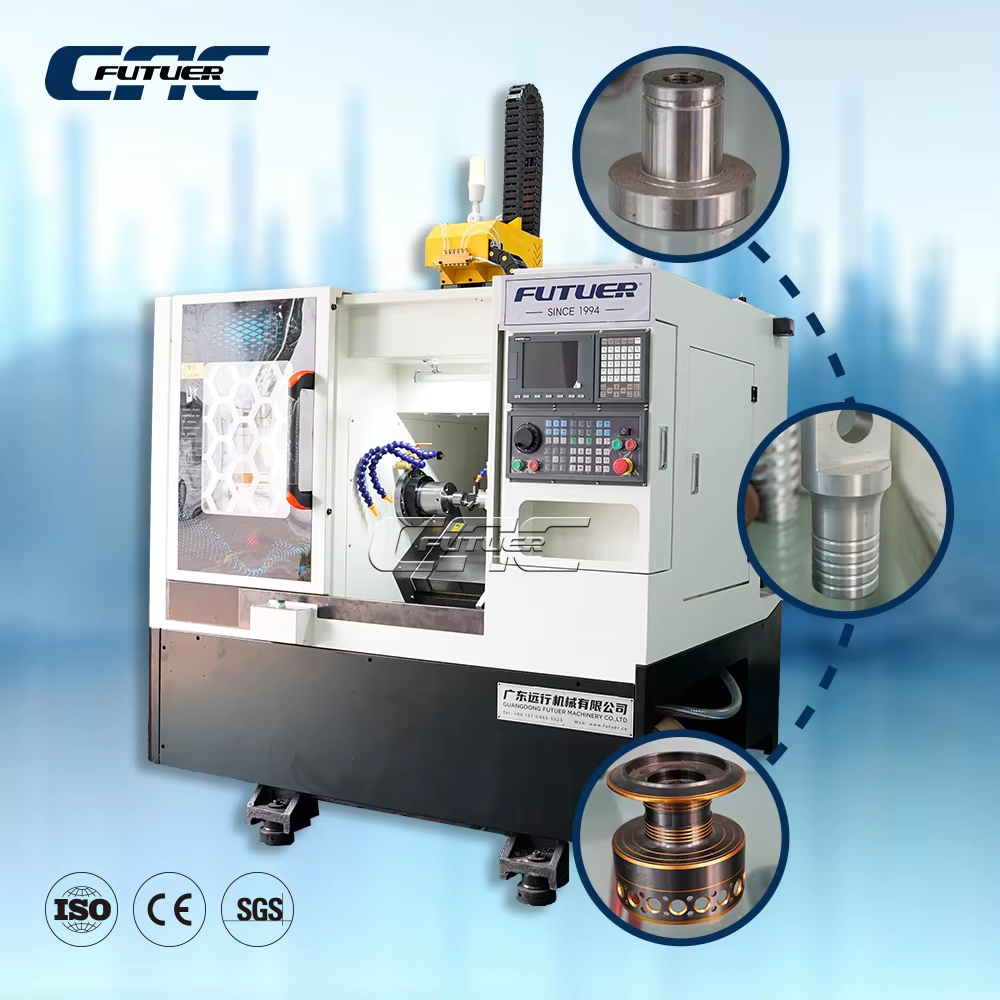
Precision Engineering: How CNC Turning Machines Achieve Sub-Micron Accuracy
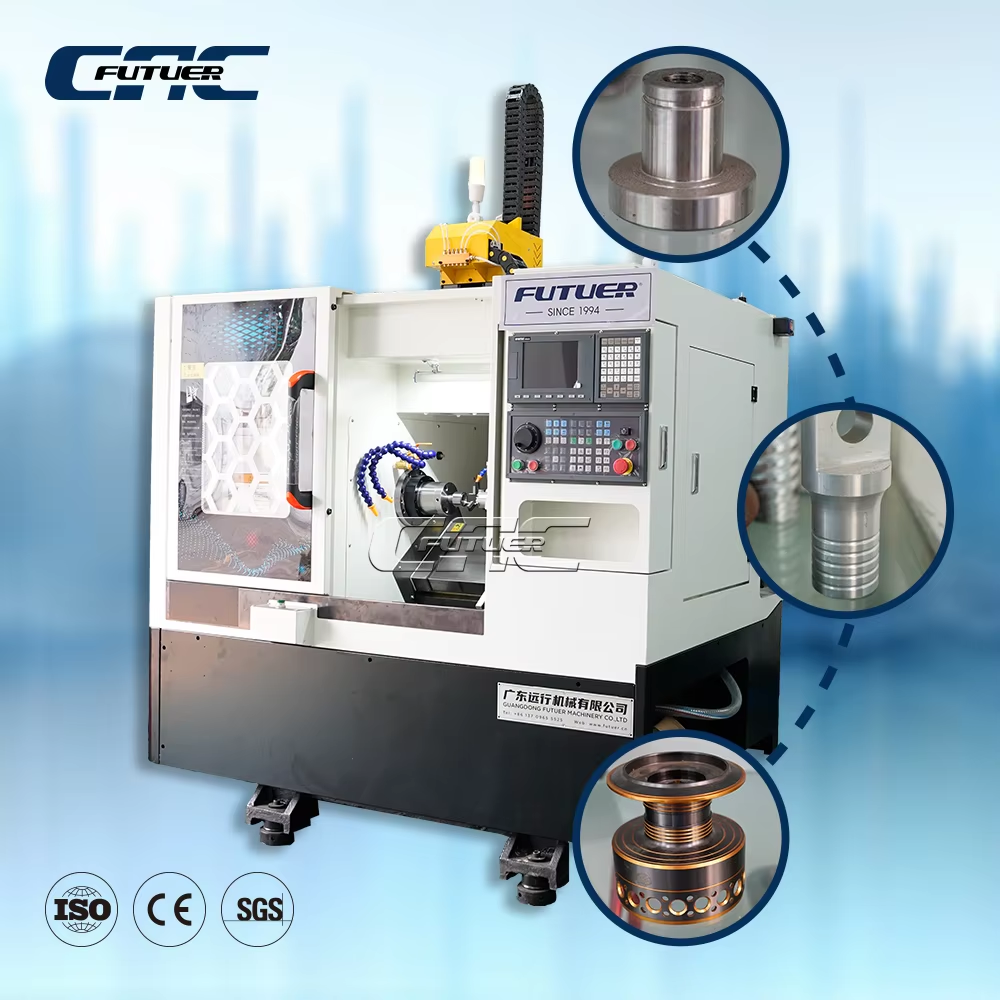
Core Enablers: Machine Rigidity, Thermal Compensation, and High-Resolution Feedback Systems
The sub-micron accuracy achieved by CNC turning machines comes down to three main factors working together: structural rigidity, thermal stability, and real time positional control. When it comes to suppressing vibrations during those high speed cuts, manufacturers often turn to polymer concrete bases combined with hardened linear guides. This helps maintain the geometric integrity of the workpiece throughout the machining process. Thermal management is another critical aspect. Modern machines embed temperature sensors alongside sophisticated coolant flow algorithms that actively counteract thermal expansion. These systems typically keep dimensional drift within about plus or minus 1.5 microns per meter per degree Celsius, meeting the standards set by ISO 230-3. For position verification, most advanced machines now feature closed loop feedback systems with encoder resolutions around 0.1 microns. These constantly check and adjust tool positions while cutting is happening. Many systems also incorporate Statistical Process Control (SPC) technology that keeps an eye on key dimensions in real time. If something starts drifting beyond acceptable limits, say over 0.005 mm tolerance, the machine will actually stop production automatically to prevent bad parts from being made. All these technologies working in concert can produce surface finishes as smooth as Ra 0.4 microns, which rivals what skilled workers can achieve manually but without the inconsistencies that come with human operators.
Debunking the Myth: Can CNC Turning Machines Truly Enable Zero-Defect Production?
Modern CNC turning machines typically hit defect rates under 0.01%, but getting to absolutely zero defects just isn't possible because of all sorts of physical factors and changes in the environment. Problems like tiny pockets of air (porosity) or differences in how metal grains form in high performance alloys still account for about half a percent of parts that don't meet size specifications, even when everything else is set up perfectly. Tool wear happens no matter what. Those carbide cutting tools start chipping away at their edges after around eight hours straight of working on tough materials like titanium, which can throw off measurements by up to five micrometers. Temperature fluctuations in the workshop matter too. If it gets warmer than usual by just five degrees Celsius without proper climate control systems running, machine positions can drift outside acceptable ranges by plus or minus three micrometers. But there's hope. Smart maintenance systems powered by artificial intelligence help fight back against these issues by predicting when tools will start failing and when heat might mess with accuracy before actual damage occurs. So while we may never reach perfect results, CNC turning remains the most reliable option available today for making precision parts in real world conditions.
Performance Advantages: Speed, Repeatability, and Operational Consistency
Optimizing Cycle Time and Uptime Through Adaptive Control and Tool Management
Adaptive control systems can tweak feed rates, spindle speeds, and how deep the cutting goes in response to what sensors are telling them right now. These adjustments help compensate when tools start wearing down, deal with differences in material hardness, and tackle unwanted vibrations during machining. The result? Cycle times get cut down somewhere between 15% and 30%, all while keeping measurements within about 0.005 mm accuracy. When it comes to managing tools, integration makes things much smoother. The system handles the order of operations, checks if everything is set correctly, and automatically adjusts for any tool offset issues. This cuts down on setup time dramatically compared to doing everything manually, sometimes saving as much as 90%. Throw in solid error handling features and reliable power management solutions, and manufacturers can run their machines overnight without anyone watching. Equipment gets used around 85% of the time or better, and they still maintain both precision standards and workplace safety protocols.
Ensuring Batch-to-Batch Consistency with Integrated SPC and Real-Time Monitoring
The embedded SPC system keeps tabs on all those key measurements against specs throughout production, not just spot checks here and there. We actually probe each part during manufacturing to check diameter, runout, and surface finish on every single component made. When something goes outside our tolerance range of about 0.8 standard deviations, the system jumps in right away with alerts and kicks off automatic corrections, which cuts down scrap rates somewhere between 40% and 60%. The thermal compensation feature is pretty impressive too. It keeps position accuracy tight within 2 micrometers even when temperatures fluctuate around the shop floor. That means parts coming out at night look exactly like ones made during morning shifts. With this kind of consistent quality tracking, we hit nearly 99.8% first pass yields on big production runs. Makes life much easier when dealing with those tough regulations from aerospace (AS9100) and medical device standards (ISO 13485).
Smart Integration: CNC Turning Machines as Nodes in the Connected Factory
IoT Connectivity, Digital Twin Simulation, and Predictive Maintenance for CNC Turning Machines
IoT-enabled CNC turning machines transmit real-time operational data—including spindle load, tool wear indices, vibration spectra, and energy consumption—to centralized MES and cloud platforms. This connectivity supports remote diagnostics, dynamic scheduling, and tolerance-based process optimization—enabling operators to intervene before deviations affect part quality.
Digital twin simulation allows engineers to virtually prototype machining strategies, test toolpaths against material-specific models, and validate complex geometries prior to physical execution. By identifying collision risks and optimizing cutting sequences in silico, digital twins reduce trial runs by up to 30% and eliminate costly rework.
Predictive maintenance algorithms analyze multi-sensor data streams to forecast bearing wear, motor imbalance, or coolant system degradation weeks in advance—cutting unplanned downtime by 15–20%. This proactive approach preserves mechanical integrity and ensures sustained micron-level accuracy across extended production cycles.
Together, these technologies integrate CNC turning machines into responsive, self-optimizing production networks—turning isolated assets into collaborative nodes that drive throughput, quality, and cost efficiency.
Critical Industry Applications Leveraging CNC Turning Machine Capabilities
CNC turning machines are essential for creating parts where even the smallest mistake can lead to serious problems in safety, regulation, or performance. Take aerospace manufacturing as an example. These machines produce turbine blades, fuel nozzles, and landing gear made from tough materials like Inconel 718. They need to maintain incredibly tight tolerances around 5 microns so aircraft stay safe and resist wear over time. The automotive industry depends heavily on these machines too. Car companies make thousands of transmission shafts, CV joints, and electric motor rotors each day. When these parts aren't perfectly shaped, it affects how quiet and smooth the car runs, plus shortens the life of the whole drivetrain system. Medical device manufacturers turn to CNC technology for making titanium hip implants and surgical tools. Getting those surfaces smoother than 0.4 microns isn't just about looks it stops bacteria from growing on the devices which matters a lot when they're inside people's bodies and must pass FDA tests. Industrial equipment factories also benefit from this technology when building things like hydraulic valves and pump casings. Those tiny gaps between moving parts need to be spot on so nothing leaks, especially when dealing with pressures over 350 bar. Looking at all these different applications shows why CNC turning remains such a cornerstone technique for making reliable parts that matter for safety across multiple industries.
FAQ
What is the main advantage of CNC turning machines in precision manufacturing?
CNC turning machines offer high accuracy and efficiency in producing complex parts with tight tolerances, making them crucial for industries requiring reliable and precise components.
Can CNC turning machines achieve zero-defect production?
While CNC machines significantly reduce defect rates to below 0.01%, achieving absolute zero defects is impossible due to physical factors like tool wear and temperature changes.
How do CNC turning machines contribute to industry safety standards?
CNC machines maintain tight tolerances required for safety-critical components in industries like aerospace, automotive, and medical devices, ensuring component reliability and compliance with regulations.