
 EN
EN
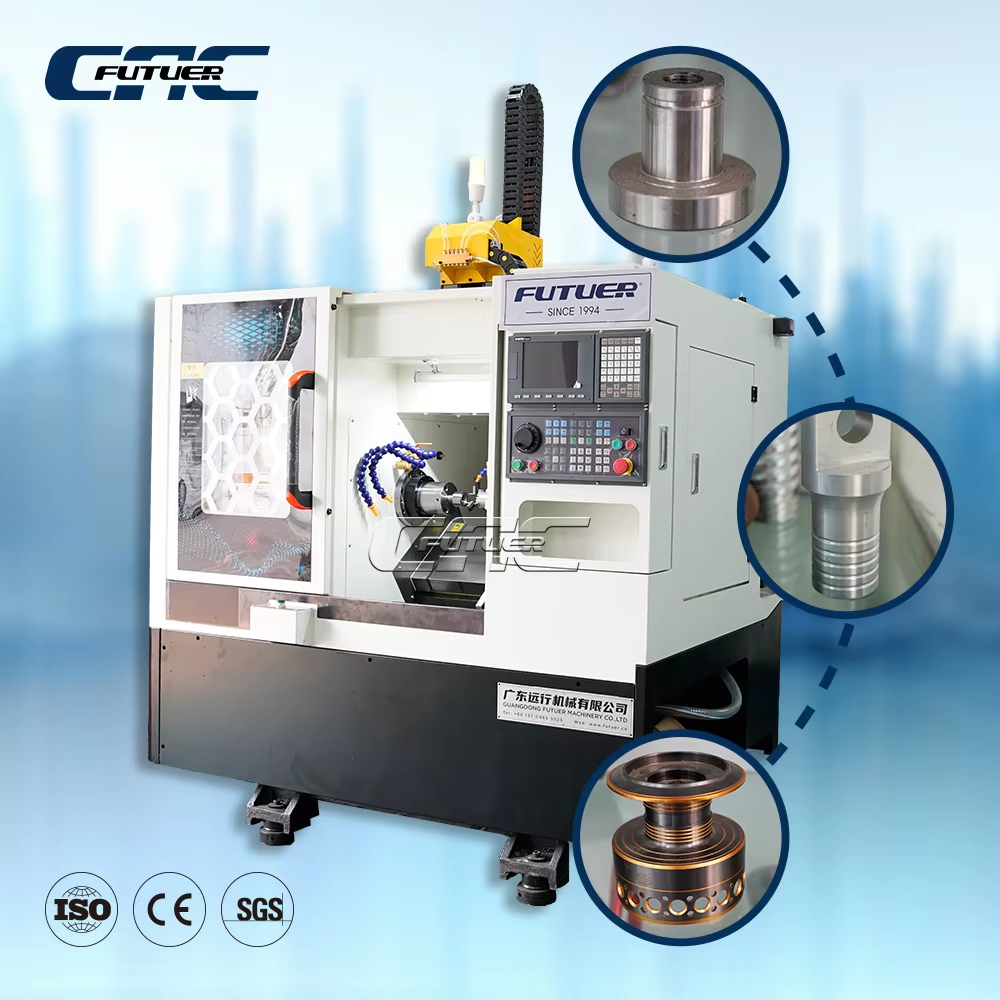
Core Working Principle: Rotational Material Removal in CNC Turning Machines
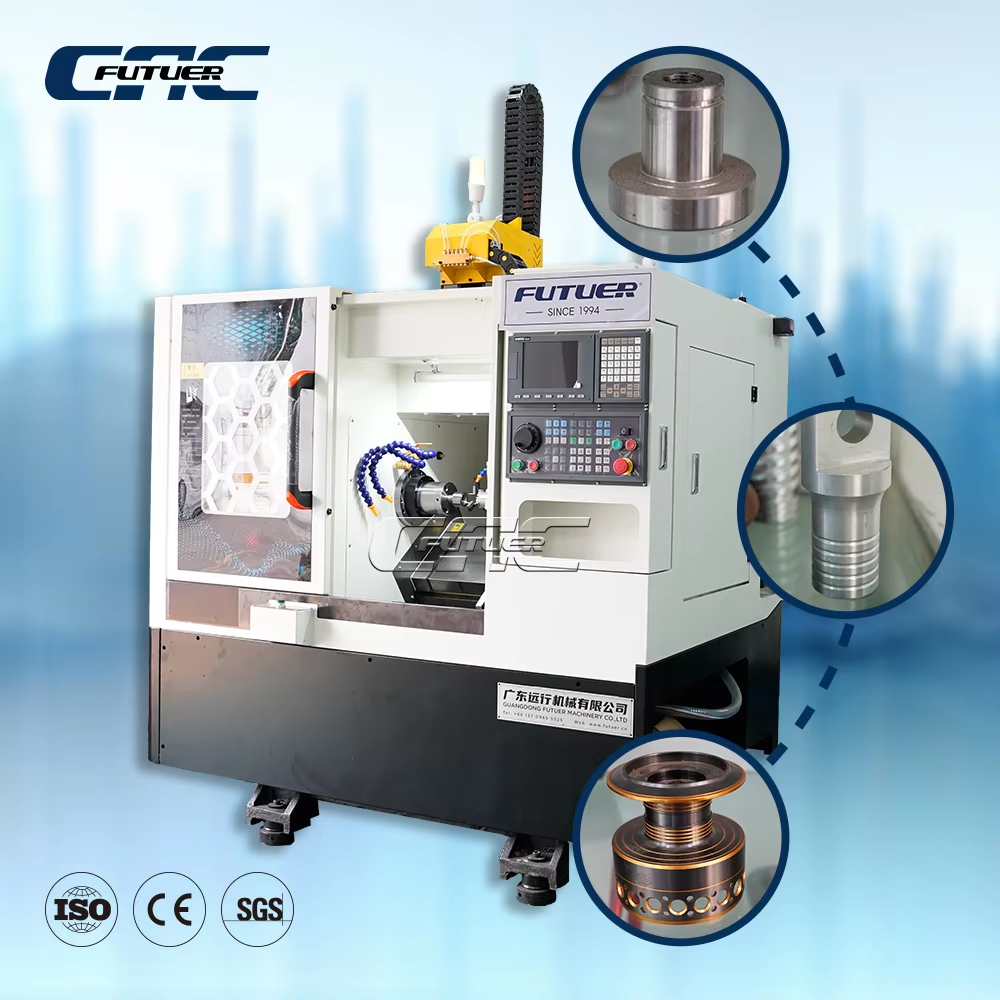
Kinematics of Cutting: How Workpiece Rotation and Tool Feed Enable Precision Chip Formation
In CNC turning, the process works when the workpiece rotates while a cutting tool moves in a controlled manner. When spinning at speeds ranging from around 100 to 3000 revolutions per minute, the part interacts with a fixed cutting instrument that travels across both radial (X axis) directions and axial (Z axis) paths. The movement creates shear forces which cut away material forming long continuous chips. Getting the right balance between spindle speed and feed rate matters a lot for how thick those chips become and what kind of surface finish results. Take a 4 to 1 ratio for instance where someone might run their machine at 1000 RPM combined with about half a millimeter per revolution feed when working with steel alloys. Compared to milling operations, turning takes advantage of circular shapes making it possible to take out material up to thirty percent quicker for things shaped like shafts or bushings that need machining.
Thermal and Force Dynamics at the Cutting Interface
When cutting forces go over 200 psi, they create interface temperatures that climb past 700 degrees Celsius mainly because of friction. This heat speeds up tool wear significantly and can cause dimensional drift as much as 0.05 mm every hour without proper management. Getting coolant to the right spot cuts down on thermal buildup by about half, which helps keep those important metallurgical properties intact in those tough aerospace materials we work with. The way these forces act matters too. Radial forces push against tools when doing facing operations while tangential forces take over during longitudinal turning and run along the surface of what's being worked on. Looking at industry numbers shows that getting the balance wrong leads to around 18 percent more scrap material and tools lasting only 60 percent as long as they should. That's why modern machinery now comes equipped with real time force monitoring systems using piezoelectric sensors. These help prevent dangerous thermal runaway situations and keep everything running smoothly throughout production runs.
Critical Hardware Systems Enabling CNC Turning Machine Operation
Spindle Design, Torque Control, and Runout Management
At the heart of any CNC turning operation sits the spindle, which serves as the rotating base for all machining work. These spindles are built to handle three main requirements: precision cutting, sufficient power delivery, and maintaining stability even when temperatures rise during long production runs. The direct drive motor systems combined with special hydrodynamic bearings can maintain rotational accuracy better than 0.0001 inches or about 0.0025 millimeters, and they also stand up well against heat related distortions that might otherwise affect part quality. When working with different materials, torque control systems automatically adjust their output levels accordingly. For example, when dealing with tough aerospace grade metals, these systems typically need to sustain between 150 and 220 Newton meters of torque throughout the machining process. Precise laser alignment keeps runout measurements below just one micron, something absolutely critical when manufacturing parts with very tight tolerances such as those found in hydraulic valve assemblies. Special vibration dampening housings help reduce annoying harmonic chatter by around forty percent, allowing machinists to achieve surface finishes as smooth as 0.2 Ra micrometers. And finally, advanced thermal growth compensation algorithms ensure that position remains accurate within plus or minus two microns across entire eight hour production shifts without significant drift.
Chuck Types, Clamping Integrity, and Turret Indexing Accuracy
The foundation of effective workholding lies in specialized chucks designed for specific tasks. For instance, hydraulic three-jaw models generate anywhere from 800 to 1,200 psi of clamping power, making them ideal for holding those tricky irregular castings securely during machining operations. Meanwhile, collet chucks deliver exceptional concentricity with less than 0.003 mm total indicator runout when working with bar stock materials. Some advanced clamping systems now come equipped with strain gauges that continuously monitor applied pressure throughout the machining cycle. These smart systems will actually stop the machine automatically whenever detected force falls below what's considered safe for the material being worked on. Tool changers mounted on turrets complete their task remarkably fast, swapping tools in as little as quarter of a second. The mechanical design includes anti-backlash worm gears which maintain indexing accuracy down to around 3 arc seconds. Positioning precision is further enhanced by linear encoders capable of measuring location with an impressive tolerance of plus or minus 0.0005 inches (about 0.0127 mm). This level of accuracy becomes particularly important when performing live tool milling operations where dimensional consistency matters most. Manufacturers rely on ISO 10791-7 standards to verify turret rigidity requirements, ensuring that deflection remains below 5 micrometers even when subjected to substantial cutting forces exceeding 500 Newtons.
Digital Control Workflow: From CAD to CNC Turning Machine Execution
G-Code Generation, Toolpath Simulation, and Machine-Specific Post-Processing
Most manufacturing starts on screen in CAD programs where engineers sketch out shapes and set exact measurements for parts in either flat drawings or full 3D models. Once those designs are ready, CAM software takes over translating them into actual instructions called G-code that machines can follow. It tells the equipment exactly how to move cutting tools around, at what speed, when to switch between different tools, etc. Before any actual machining happens though, smart simulation software checks everything out virtually first. It looks for potential problems like bits hitting wrong spots or removing too much material, which helps cut down on wasted materials and saves time by preventing expensive machine stoppages later. Then comes the final step where specialized post processors tweak the code so it works properly on specific CNC machines with their particular setups including things like how tools are arranged in turrets, offset positions, movement range limitations, and even how commands need to be formatted for different controllers. Putting all these steps together creates a seamless process that cuts down on mistakes from human error during translation phases, speeds up getting new designs right faster, and makes sure that the very first part produced matches specifications correctly even for complicated rotating pieces.
End-to-End CNC Turning Process: Setup, Machining, and Verification
Workpiece Zeroing, Tool Offset Registration, and In-Process Quality Checks
Getting precision right begins with proper setup work. Techs need to set the workpiece zero point first – this becomes their reference point for all machining operations. They also check and adjust tool offsets so what happens on screen actually matches what's happening on the machine floor. Once everything is running, built-in sensors keep an eye on things like how smooth the surface looks, whether dimensions are staying within spec, and if heat buildup is causing parts to expand unexpectedly. These sensors let operators make corrections while the job is still in progress rather than waiting until the end. Midway through production runs, the system checks geometry to make sure everything stays aligned. When tools get hot they tend to stretch out a bit, so there's special compensation built in for that too. And watching chip load helps catch signs of tool wear before it becomes a problem. All these checks together change how quality control works completely. Instead of just inspecting finished parts at the end of the line, manufacturers now have constant oversight throughout production. This approach keeps tolerances tight around 0.005 mm and reduces waste significantly compared to older methods where problems were only spotted after parts were already made.
FAQ
What is CNC turning?
CNC turning is a precision machining process where a rotating workpiece is shaped using a controlled cutting tool that removes material to achieve desired dimensions.
How do cutting forces affect the CNC turning process?
Cutting forces create heat and wear on tools, influencing temperature control, tool life, and the dimensional accuracy of machined parts. Proper management of these forces is crucial for efficient and quality machining.
Why is G-code important in CNC machining?
G-code provides the instructions that CNC machines follow to execute operations such as movement, speed, and tool switches, ensuring accurate replication of designs from CAD models.
How does a spindle contribute to CNC turning?
The spindle is a critical component in CNC turning, serving as the rotating mechanism that holds and turns the workpiece. It requires precision, power, and temperature stability for effective operations.
What role do sensors play in CNC turning?
Sensors monitor various parameters like surface smoothness, dimensional accuracy, and heat buildup, allowing real-time adjustments and continuous quality control during production runs.