
 EN
EN
CNC Turning Machine:Precision, Repeatability, and Quality Consistency
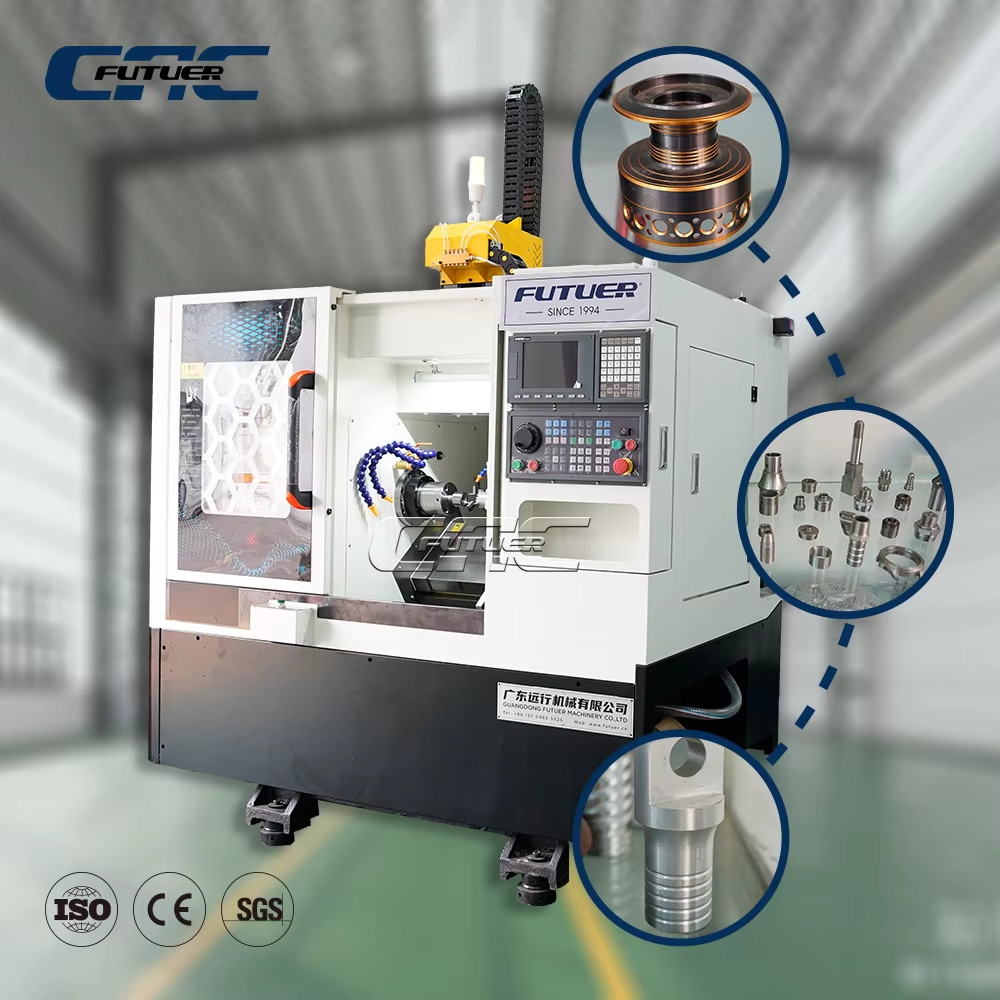
How CNC Turning Machines Deliver Sub-Micron Tolerances Across Batches
Modern CNC turning machines can hit those incredibly tight tolerances around 0.005 mm thanks to their closed loop servo systems and digital toolpath programming. These automated systems handle things that would be impossible manually, constantly adjusting for heat expansion and tool wear during operation through built in measurement probes. No need for humans to measure repeatedly which means fewer mistakes and parts that stay accurate from one batch to the next. Industries like aerospace and medical devices really benefit from this kind of precision since they have strict regulations and zero tolerance for failure. Manufacturers report seeing scrap reduction rates approaching 90% when switching from traditional machining methods. Every single component produced comes out exactly the same specification as the last, which makes quality control much simpler in high stakes manufacturing environments.
Human-Induced Variability in Conventional Lathe Operations and Its Impact on Part Uniformity
Old school lathes rely completely on what the operator knows and does when taking measurements, making adjustments, and deciding when something is done right. And this creates problems because different people working at different times will naturally produce varying results. When machines are run manually, we usually see tolerances around plus or minus 0.1 mm. Why? Because nobody applies exactly the same pressure every time, reading those little scales or micrometers gets tricky after a while, and let's face it, nobody stays sharp all day long during those long production runs. Sure, really good machinists can make single pieces with great accuracy. But trying to keep everything consistent when multiple workers take over throughout the day? That just doesn't happen without some kind of computer help or automatic corrections. The inconsistency shows up everywhere from how parts fit together to how well they actually work, and most notably affects things like turbine components where everything needs to mesh perfectly, or medical implants where even small variations matter a lot.
Total Cost of Ownership: Investment, Labor, and Long-Term Efficiency
Upfront Costs vs Lifecycle Value: CNC Turning Machine ($25K–$120K) vs Conventional Lathe ($5K–$20K)
Automated precision consistently reduces scrap by 15–22% annually versus manual machining. One electronics manufacturer reported an 18% reduction in operational costs within 12 months of transitioning to CNC—even after absorbing a $90K capital outlay—demonstrating how precision-driven efficiency offsets initial cost premiums over time.
Labor Optimization: One CNC Operator Managing Multiple CNC Turning Machines vs 1:1 Skilled Labor Ratio for Conventional Lathes
With CNC turning machines, one operator can actually manage anywhere from three to five different units at once thanks to those central programming panels and automatic cycle tracking systems. Traditional lathes tell a different story though. Each machine needs its own experienced worker standing right there all day long making tool switches, adjusting feeds, and constantly checking product quality as it comes off the line. When looking at costs, labor eats up around 34 percent of what companies spend running manual operations, while automated shops only see about 19 percent going toward wages. Take this aerospace parts maker in the Midwest for example. After switching to these multi-unit CNC setups, they saved themselves nearly quarter of a million dollars each year on labor costs. And guess what? Their production numbers stayed exactly the same and product quality didn't drop a bit. That's pretty telling about how automation turns workers from something expensive and fixed into a flexible asset that grows with business needs.
Production Scalability: Speed, Volume, and Flexibility Trade-Offs
High-Volume Advantage: 65% Faster Cycle Times with CNC Turning Machines in Repetitive Production
When it comes to running large batches of standard parts, CNC turning machines really shine when it comes to getting things done faster. With automation taking care of everything from changing tools to adjusting speeds and checking quality during production, there's no waiting around for human operators to step in. This cuts out all those annoying delays that happen with old school lathes. The difference is pretty dramatic too. A regular lathe might knock out about 100 pieces in an 8 hour workday, while a CNC machine can crank out around 165 instead. That means lower costs per item and quicker turnaround on customer orders. And here's something interesting nobody talks about much these days the machines don't sacrifice accuracy for speed either. They keep their measurements spot on within 0.0002 inches even after making thousands of identical parts. For industries where precision matters most like car engines or medical instruments, this makes CNC turning machines absolutely indispensable for mass production needs.
Low-Volume & Prototyping Edge: When Conventional Lathes Offer Faster Setup and Greater Adaptability
Traditional lathes still have their place when dealing with small runs, experimental projects, or anything needing constant adjustments. Think about making prototypes, special tools, or research components. Setting up single pieces takes around 70 percent less time compared to CNC machines because machinists don't need to go through all that CAM programming stuff. Instead they just turn knobs and adjust dials directly. Want to change something while cutting? No problem at all on conventional lathes. Just tweak the depth or speed right there during operation. With CNC systems, any changes mean rewriting code, running simulations, then validating everything again. When production runs stay below about 50 items, this lack of programming hassle makes traditional lathes much quicker to respond to and cheaper overall. Plus, these simpler machines handle weird materials better too. Try working with abrasive composites or soft plastics on an automated system? Often causes headaches for computer generated tool paths. That's why many shops keep conventional lathes around even in today's digital age. Flexibility matters more than mass production sometimes.
Part Complexity, Automation, and Skill Requirements
Advanced Capabilities Enabled by CNC Turning Machines: Multi-Axis Contouring, Live Tooling, and Y-Axis Milling
CNC turning machines today handle complex part shapes that used to need several extra steps. With multi-axis movement across X, Z axes plus synchronized C-axis action, plus live tools that let us mill and drill while the part spins, and Y-axis features for those tricky off-center details, we no longer have to stop and reposition parts or set up separate milling operations. The result? Better positioning accuracy, smoother surfaces, and fewer mistakes caused by handling parts too much. Most programmed cutting paths hit around 0.0002 inches repeatable accuracy, sometimes better than 5 microns. That beats what even experienced machinists can maintain when working by hand on complicated shapes like tapers, oddball diameters, or asymmetrical forms. What this means for shop floors though is that skill sets are changing. Machinists need to get comfortable with CAM software, simulating tool paths, understanding G-code logic, and coordinating multiple turret stations instead of relying solely on their hands. Traditional lathes still work great for quick prototypes and simple parts, but once geometry gets complicated enough, CNC machines become essential for making complete parts without breaking them down into multiple setups.
FAQ
What are the main advantages of CNC turning machines over conventional lathes?
CNC turning machines offer higher precision, consistent quality, faster cycle times, enhanced automation, and reduced scrap rates. They also allow one operator to manage multiple units, which optimizes labor costs.
When is it preferable to use a conventional lathe instead of a CNC turning machine?
Conventional lathes are more suitable for low-volume production, prototyping, and handling materials that might be challenging for CNC systems. They allow for on-the-fly adjustments without extensive programming.
How do CNC turning machines contribute to cost efficiency?
CNC turning machines reduce labor costs, minimize scrap rates, enhance speed and productivity, and have a longer lifespan, which offsets their higher initial investment over time.