
 EN
EN
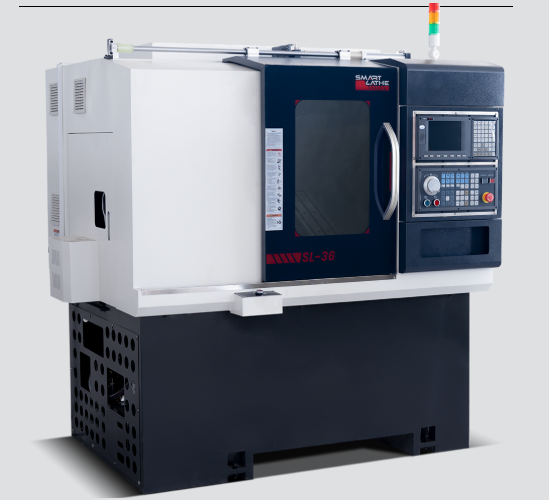
Slant Bed Lathe Structure: Enhancing Stability Through Geometric Design
Why the Slant Bed Replaced Flat Bed Designs in Modern CNC Lathes
Moving from flat bed to slant bed CNC lathes represents a major step forward in machining technology, all because shops want better accuracy, steadier performance, and faster production times. Flat bed machines might be easier to manufacture, but they just don't hold up under the demands of precision work at speed. The slant bed design with its triangular shape actually makes the whole machine about 20% sturdier than traditional models according to research from Jui and colleagues back in 2010. This stronger build lowers the machine's center of gravity and spreads forces more evenly across the structure. When cutting at high speeds, these lathes cut down on vibrations by around 40%, which means smoother finishes on parts and tools that last longer before needing replacement. Plus, the angled setup helps chips fall away naturally from the cutting area, so operators spend less time clearing debris and fixing jams. Because of all these advantages, most serious machining facilities now rely on slant bed machines for their critical turning operations.
The Role of Bed, Column, and Headstock in CNC Lathe Rigidity
Getting rigidity right matters a lot for maintaining machining accuracy, especially when working with slant bed lathes. These machines have beds, columns, and headstocks built as one unit which helps them stand firm even when subjected to heavy loads. Most manufacturers go for high grade cast iron construction with extra ribs added in key spots throughout the bed. This setup creates a rock solid base that doesn't bend much during deep cuts into materials. The whole point of this structural strength is to keep dimensions accurate over time something absolutely essential in fields like aerospace components or medical devices where measurements need to be spot on down to the micron level. Studies from various machining shops indicate that improving bed rigidity cuts down those annoying vibrations that cause errors by around 60 percent. Better rigidity means better parts and processes that repeat reliably batch after batch.
Preloaded Angular Contact Bearings and Spindle Deflection Control
The way spindles perform really depends a lot on what kind of bearings are chosen and how they're preloaded. When we talk about preloaded angular contact bearings, these basically remove any internal clearance that might be there. What this does is boost spindle stiffness significantly compared to regular setups, maybe around 40% better in most cases according to shop floor observations. The extra rigidity helps stop those tiny rotational errors from getting passed onto the actual workpiece, which means better surface finishes even when running heavy cuts. Another important benefit comes into play during long production cycles. Proper preloading actually handles thermal expansion as machines run for hours on end, so everything stays aligned and accurate throughout the entire job without needing constant adjustments.
Case Study: Dual-Wall Reinforced Bed Design Innovation
One major equipment maker recently rolled out a new bed design featuring dual walls with reinforcement that makes the whole thing much sturdier without adding extra weight. The internal ribs are arranged in a way that spreads out stress better across the surface, and tests show around 30 percent less vibration than older models with just one wall. Because everything is laid out symmetrically, heat moves through evenly too, so there's less warping when machines run for hours on end. For industries where precision matters most like semiconductor manufacturing or aerospace parts production, these kinds of improvements mean components stay dimensionally stable over time, which is what keeps expensive machinery running smoothly year after year.
Hybrid Ceramic Bearings: Reducing Thermal Growth at High Speeds
Thermal control is really important when working with high speed machining operations. The hybrid ceramic bearing type that combines silicon nitride rollers with steel races actually produces around 40 percent less heat compared to standard steel bearings once they hit over 8,000 RPM. These bearings expand less when heated which keeps them properly aligned and preloaded even as temperatures change, so there's fewer problems from thermal expansion messing up precision work. Because of this property, machinists can run their equipment at top speeds while still getting those super fine details right down to the micron level. That makes these special bearings particularly good for processing harder materials where spindle speed matters a lot in achieving quality results.
Thermal Stability and Vibration Damping in Continuous Operation
Managing Thermal Deformation with Symmetrical Slant Bed Layouts
When it comes to continuous machining operations, thermal deformation remains one of the biggest headaches for manufacturers trying to maintain precision. The good news? Slant bed lathe designs tackle this problem head on with their balanced layout approach. These machines spread out heat more evenly throughout the system rather than letting it build up in specific areas. What does this mean practically? Less warping occurs as materials expand when heated, so parts stay within tolerance specifications much longer. Most shops find that parts produced on slant beds show fewer dimensional variations after hours of operation compared to traditional models. This makes them particularly valuable for batch production where consistency matters most.
Infrared Analysis of Heat Distribution in Long-Term Machining Cycles
Looking at infrared images shows big temperature differences in regular machines, sometimes over 40 degrees Celsius, especially around where the spindle meets the tailstock area. Slant bed designs tend to handle heat much better because of how they're built. The way heat spreads out evenly across these machines means parts don't expand too much in one spot, which cuts down on those annoying positioning mistakes and helps maintain better dimensions during actual machining work. Manufacturers really notice this difference when running precision jobs for extended periods.
Low-Expansion Cast Iron and Internal Cooling Channels: Emerging Trends
Manufacturers are fighting back against thermal drift by turning to special cast iron alloys that expand very little when heated. These materials have thermal expansion rates under 11 micrometers per meter degree Celsius, which makes all the difference in precision work. Some of the newer machines even come equipped with built-in cooling systems that run temperature controlled fluids through them, maintaining the machine bed just one degree above or below room temperature. When combined, these innovations cut down on thermal distortion by around 70 percent compared to older materials. For shops that need consistent results day after day, this kind of improvement in stability over time is worth every penny invested in upgraded equipment.
Passive and Active Vibration Suppression to Prevent Chatter Marks
Good vibration control usually needs both passive and active techniques working together to stop those annoying chatter problems and get better surface finishes on parts. The passive stuff works by using special damping materials layered in a way that soaks up vibrations through something called viscoelastic deformation. For the active side of things, manufacturers install piezoelectric sensors along with actuators that constantly monitor and fight back against vibrations as they happen. These systems can cut down vibration levels quite a bit sometimes over 80% depending on the setup. When shops combine these approaches, their machines stay stable during cuts and produce consistently good surfaces, which matters a lot when dealing with tough materials or complex geometries.
Long-Term Reliability: Material Selection and Modular Design Innovations
Surface Hardening and Wear Resistance in Guide Ways After 10,000+ Hours
The guide ways found on slant bed lathes go through special hardening treatments like induction heating or nitriding, which brings their hardness up past 60 HRC. What we get is a tough outer layer around half a millimeter to two millimeters thick that stands up really well against all that grinding from metal chips and the constant back and forth motion of the carriage parts after thousands upon thousands of operating hours. When manufacturers precision grind these surfaces, they actually create tiny geometric features that help hold onto lubricants better. This means the components last longer before needing replacement while keeping their position accuracy within about five microns even after many years in service something absolutely essential for ensuring machines stay reliable over time instead of breaking down unexpectedly during production runs.
Modular Bed Construction for Simplified Maintenance and Alignment
With modular construction, maintenance becomes much easier since parts can be swapped out individually without taking everything apart. Important components such as headstock mounts and those guide way segments come pre-assembled as separate units connected via standard interfaces. When something wears down, technicians just need simple hand tools to install new modules while keeping the machine aligned properly. The time saved is pretty impressive too many shops report cutting their downtime roughly in half when switching from old style monolithic setups. Plus, because these modules fit so precisely together, getting consistent results after replacements isn't just possible it's practically guaranteed most of the time.
FAQ Section
What is the main advantage of slant bed design compared to flat bed design in CNC lathes?
The main advantage is improved stability and accuracy. The slant bed design reduces vibrations by about 40%, offers natural chip removal, and supports faster production with better precision.
How do preloaded angular contact bearings improve spindle performance?
Preloaded angular contact bearings eliminate internal clearance, boosting spindle stiffness by approximately 40%. This prevents rotational errors and enhances surface finishes, especially during heavy cuts and long production cycles.
What role does thermal stability play in continuous slant bed operations?
Thermal stability reduces deformation, keeping materials within tolerance specifications. Slant bed layouts distribute heat evenly, minimizing warping and ensuring consistent part dimensions during extended operations.
Why are hybrid ceramic bearings beneficial in high-speed machining?
Hybrid ceramic bearings reduce heat generation by 40% compared to standard steel bearings, maintaining alignment and preload at high speeds. This provides precision down to the micron level, especially for hard materials.
How does modular construction simplify maintenance of slant bed lathes?
Modular construction allows parts to be swapped individually, cutting downtime nearly in half. Modules fit precisely, ensuring consistent results post-replacement without full disassembly.
Table of Contents
-
Slant Bed Lathe Structure: Enhancing Stability Through Geometric Design
- Why the Slant Bed Replaced Flat Bed Designs in Modern CNC Lathes
- The Role of Bed, Column, and Headstock in CNC Lathe Rigidity
- Preloaded Angular Contact Bearings and Spindle Deflection Control
- Case Study: Dual-Wall Reinforced Bed Design Innovation
- Hybrid Ceramic Bearings: Reducing Thermal Growth at High Speeds
- Thermal Stability and Vibration Damping in Continuous Operation
- Long-Term Reliability: Material Selection and Modular Design Innovations
-
FAQ Section
- What is the main advantage of slant bed design compared to flat bed design in CNC lathes?
- How do preloaded angular contact bearings improve spindle performance?
- What role does thermal stability play in continuous slant bed operations?
- Why are hybrid ceramic bearings beneficial in high-speed machining?
- How does modular construction simplify maintenance of slant bed lathes?