
 EN
EN
Unmatched Precision and Repeatability with CNC Turning Center Technology
How CNC Turning Centers Achieve Micron-Level Accuracy
Modern CNC turning centers can reach incredible precision levels around ±0.0001 inches thanks to their solid construction, linear guides, and those fancy servo-controlled axes that move so precisely. The machines actually have smart software built in that adjusts for things like heat expansion and vibrations during operation. And let's not forget the diamond tipped cutting tools that stay sharp even after hours of work. All these features working together make it possible to create really complicated shapes from ultra fine threads right down to microscopic fluid channels. Surface finish quality gets pretty amazing too, sometimes reaching just 0.04 microns Ra which is basically glass smooth for most applications.
Role of Closed-Loop Feedback Systems in Consistent Output
Closed-loop feedback systems continuously monitor torque, temperature, and positional accuracy using linear scales and laser interferometers. Adaptive spindle control adjusts cutting parameters in real time when tool wear exceeds 15 microns, ensuring tolerances remain within ±0.002 mm over extended operations. This dynamic correction maintains consistent output across shifts and environmental fluctuations.
Case Study: Aerospace Component Production with <0.001-inch Tolerance
A 2023 implementation at a leading aerospace supplier achieved a 99.7% conformity rate for 316L stainless steel hydraulic sleeves requiring 0.0008-inch concentricity. By integrating live tooling and C-axis positioning, the CNC turning center eliminated manual polishing steps and reduced component variance by 53% compared to prior methods.
Long-Term Repeatability Across Batch Runs
| Production Metric | CNC Turning Center | Manual Lathe |
|---|---|---|
| 500-Part Tolerance Range | ±0.0015" | ±0.012" |
| Tool Wear Compensation | Automatic | Manual Adjustments Required |
| 30-Day Output Consistency | 98.4% | 72.1% |
Comparison with Manual Lathe Limitations
Manual lathes typically struggle to maintain repeatability beyond ±0.005 inches due to human variability. CNC turning centers overcome this with programmable tool offsets and digital workholding verification, achieving 86% faster setup times for precision batches (Ponemon 2023).
Maximized Production Efficiency Through CNC Turning Center Automation
Reducing Cycle Times with Multi-Axis CNC Turning Centers
The multi axis CNC turning centers cut down on cycle times because they can machine parts from several different angles at once. Traditional 2 axis lathes just don't compare to what modern 5 axis machines can do. These advanced systems handle tasks like facing operations, drilling holes, and creating contours all during one setup process. According to some recent research published in Advanced Machining Journal back in 2023, this approach cuts those annoying repositioning delays by around 37%. For complicated parts such as hydraulic valve bodies, manufacturers report seeing their overall production time drop by roughly half when switching to these integrated workflows. Shops working on high precision components find this makes a real difference in meeting tight deadlines without sacrificing quality standards.
Integration of Bar Feeders and Part Catchers for Unattended Operation
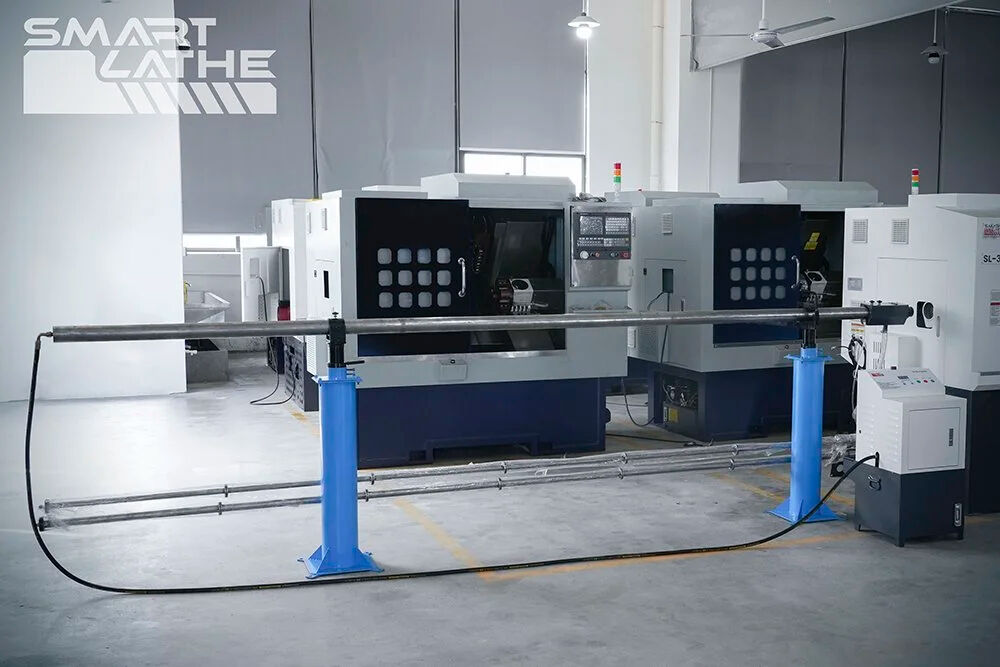
More shops are combining CNC turning centers with automated bar feeders and sorting systems these days, allowing machines to run for over 18 hours straight without anyone standing by. The setup works pretty straightforwardly actually - the system keeps feeding in new stock while at the same time grabbing those finished pieces through pneumatic catchers, so nobody has to mess around manually picking things up. One particular aerospace company out west saw their bottom line improve when they upgraded their old Haas ST-35 machine with this kind of automation. Their labor expenses dropped almost 30%, which made a real difference during tight budget periods. Shops that have gone down this route often mention how much easier it becomes to manage production schedules once these systems are in place.
Trend: Lights-Out Manufacturing Enabled by CNC Turning Centers
Lights-out manufacturing now accounts for 41% of CNC turning center utilization in high-volume industries. Facilities use IoT-enabled monitoring to run overnight batches of standardized components—such as electrical connectors and sensor housings—without operator presence, maximizing asset utilization.
Data Point: 70% Increase in Output at Automotive Supplier Facility
After deploying six Nakamura-Tome AS-200L multi-tasking CNC turning centers with robotic part transfer, a Tier 1 brake line manufacturer increased monthly output from 8,200 to 14,000 units. The system maintained ±0.0004" tolerances—a level of consistency previously unachievable with manual lathes.
Optimized Material Utilization and Waste Reduction in CNC Turning Center Operations
Advanced Tool Path Programming Minimizes Raw Material Waste
When it comes to reducing material waste, CAD/CAM systems offer some serious advantages over traditional manual approaches. According to the Precision Machining Report from last year, these computer guided processes can cut down on wasted materials anywhere between 18% to 22%. The magic happens through virtual simulations that basically take the guesswork out of machining. Think about spiral tool paths that avoid unnecessary air cutting, those clever adaptive roughing techniques that keep the workpiece intact during processing, plus accurate chip load calculations that stop tools from bending out of shape. Real world results speak volumes too. A recent study showed that when applied to titanium parts for medical implants, this kind of optimization slashed waste by nearly a third. For companies making orthopedic devices, that translates into savings of around $162k every year just on raw materials alone.
Role of Nesting Algorithms in CNC Turning Center Software
Nesting algorithms achieve 92–95% material utilization for multi-part runs by rotating components to maximize bar stock usage, tracking remnants for future jobs, and automatically adjusting for tool radius. This technology effectively solves the "Swiss cheese problem," where inefficient layouts lead to excessive scrap.
Case Study: Medical Device Manufacturer Cuts Scrap Rate by 40%
A manufacturing company based in the Midwest managed to cut down their stainless steel waste significantly over about eleven months after they started using AI nesting software for their CNC turning operations. The system's predictive capabilities helped them spot around seventy-four thousand dollars worth of recyclable tool steel chips each year. They also saved money on coolants because they could switch to dry machining methods. Plus, the software made it possible to order materials just when needed thanks to real time inventory monitoring through IoT devices. Another benefit was automated tracking of scrap materials which kept them in line with FDA paperwork rules. And as an added bonus, what they spent on getting rid of waste materials went down by almost half.
Operational Flexibility and Rapid Changeover with CNC Turning Centers
Quick Program Switching for High-Mix, Low-Volume Production
The ability to store and recall digital programs lets CNC turning centers flip between different part designs in no time at all. A recent study from Deloitte shows some impressive results too. Factories that switched to these adaptive CNC systems saw their changeover times drop by almost half, around 54%, and still kept those quality checks tight. For smaller job shops dealing with over 30 different parts each week, this kind of speed makes a world of difference. Back when they had to do all those manual setups, nearly a third of their working hours just vanished into setup work alone.
Tool Presetters and Digital Workholding Reduce Setup Time
Tool presetting stations reduce lathe setup time by 70% compared to manual methods, while digital workholding systems limit alignment errors to ±0.0002 inches. Recent implementations show complex fixture changes completed in under 15 minutes—down from over 90 minutes previously—supporting the shift toward high-frequency, small-batch production in medical and aerospace applications.
Balancing Customization and Speed in Modern Job Shops
Top-performing manufacturers achieve 98% on-time delivery for custom orders by leveraging the hybrid capabilities of CNC turning centers. One mid-sized shop increased profitable small-batch production by 40% in 2024 without sacrificing large-scale throughput, demonstrating how CNC automation enables both specialization and scalability.
FAQ
What is the precision level of modern CNC turning centers?
Modern CNC turning centers can reach precision levels around ±0.0001 inches, thanks to their solid construction, linear guides, and servo-controlled axes.
How do closed-loop feedback systems aid in consistent output?
Closed-loop feedback systems monitor torque, temperature, and positional accuracy, while adaptive spindle control adjusts cutting parameters in real time to ensure consistent output.
What are the benefits of multi-axis CNC turning centers?
Multi-axis CNC turning centers reduce cycle times and allow machining from several angles at once, thus increasing production efficiency and reducing repositioning delays.
How can material waste be reduced in CNC turning centers?
Material waste can be reduced through CAD/CAM systems and nesting algorithms, which optimize tool paths and bar stock usage to minimize scrap.
What advantage do tool presetting and digital workholding provide?
Tool presetting stations dramatically reduce setup times, while digital workholding systems minimize alignment errors for efficient production transitions.
Table of Contents
- Unmatched Precision and Repeatability with CNC Turning Center Technology
- Maximized Production Efficiency Through CNC Turning Center Automation
- Optimized Material Utilization and Waste Reduction in CNC Turning Center Operations
- Operational Flexibility and Rapid Changeover with CNC Turning Centers
-
FAQ
- What is the precision level of modern CNC turning centers?
- How do closed-loop feedback systems aid in consistent output?
- What are the benefits of multi-axis CNC turning centers?
- How can material waste be reduced in CNC turning centers?
- What advantage do tool presetting and digital workholding provide?